Payment Method Trends in iGaming now point to a practical split: digital wallets are widely used for convenience, while open banking is gaining attention because it moves funds directly between bank accounts. For players, the shift is not just about speed. It affects withdrawal checks, bonus eligibility, privacy expectations, chargeback rules, and how easily a bankroll can be separated from day-to-day spending.
A careful payment choice starts with the operator’s cashier page, but it should not end there. Players should read the payment terms, bonus rules, withdrawal limits, account verification process, and any method-specific restrictions before depositing. A method that feels fast on the way in may still face checks on the way out, especially if identity details, source-of-funds requests, or bonus wagering requirements have not been settled.
Payment Method Trends In Wallets And Banking
The strongest signal from recent data is that card payments still matter, but wallets and bank-led transfers are no longer secondary options in many online betting and casino environments. Paysafe reported in June 2026 that debit cards represented 42% among iGaming deposit methods, while digital wallets were close at 38%; credit cards and direct bank transfers were each reported at 24% Paysafe payment research. Those figures show why operators often present several payment rails rather than treating one option as the default for every user.
What The 2025 And 2026 Data Shows
Open banking growth is most visible in the UK data included in the research. In 2025, the UK recorded 351 million open banking payments, a 57% increase from 2024, and active user connections reached 16.5 million by December 2025. Open banking also accounted for 7.9% of UK Faster Payments volume in March 2025 UK open banking statistics. These numbers do not prove that every iGaming customer will prefer pay-by-bank. They do show that account-to-account payment behavior has moved beyond a niche use case.
These Payment Method Trends matter because iGaming payments have a different risk profile from ordinary online shopping. A casino deposit may be tied to bonus rules, cooling-off tools, account limits, age verification, and withdrawal review. A sportsbook or casino app also needs to match the payment account to the verified customer, since third-party payment use can trigger delays or rejected withdrawals under many operator rules.
Why Deposits And Withdrawals Feel Different
Players often judge a payment method by deposit speed, but withdrawal handling is the better test of usability. Wallets can reduce the need to share card details with each operator, while open banking can support direct bank movement through approved connections. Still, neither method removes the need for know-your-customer checks, responsible gambling controls, or operator review of unusual activity.
One practical issue is method consistency. Some casinos prefer to send withdrawals back to the original funding route where possible. If a player deposits by card, adds a wallet later, then requests a withdrawal to a bank account, the operator may ask for extra verification. That is not always a sign of poor service; it may reflect anti-fraud controls or payment-network rules. The player-facing problem is that these rules are often scattered across cashier terms, bonus pages, and account verification sections.
| Payment Route | Player Benefit | Point To Check Before Depositing |
|---|---|---|
| Digital wallet | Can separate casino payments from card details and may support faster account access | Withdrawal eligibility, fees, limits, and whether bonuses exclude wallet deposits |
| Open banking or pay-by-bank | Direct bank movement with fewer card-network steps | Bank availability, refund handling, account-name matching, and withdrawal routing |
| Debit card | Broad acceptance and familiar authentication | Processing times, declined transactions, and whether withdrawals return to the same card |
| Direct bank transfer | Useful for some larger withdrawals or account-based controls | Settlement time, minimum withdrawal size, and required bank documents |
Wallets, Open Banking, And Player Risk
Payment convenience can be helpful, but it can also make spending feel less visible. Amanda Collins’ bankroll approach is to treat every deposit route as a budget tool first and a convenience feature second. If a wallet stores funds separately from a household bank account, that can support limits. If it makes repeated deposits feel frictionless, it can weaken spending discipline. The method itself is neutral; the player’s controls decide whether it helps.
Payment Method Trends And Bonus Terms
Payment Method Trends also affect bonus use. Some operators restrict bonuses by payment method, and some promotions require a qualifying deposit from specific rails. A wallet deposit may be excluded from a welcome offer at one site and accepted at another. Open banking deposits may have their own minimums or may be treated like standard bank deposits, depending on the operator’s terms.
Players should not judge a promotion by the headline amount alone. The safer review is mechanical: wagering requirement, eligible games, maximum bet while wagering, contribution rates, expiry time, withdrawal cap, payment exclusions, and identity checks. If any of those rules are unclear, it is better to ask support before depositing than to argue after a withdrawal request has been paused.
Bankroll Controls Before Depositing
Good Payment Method Trends analysis always comes back to bankroll control. A player can choose a wallet, pay-by-bank, or debit card and still lose track of spending if there is no fixed session limit. The first decision should be the amount that can be spent as entertainment without affecting bills, savings, or credit obligations. The second decision is the payment method that best supports that limit.
- Set a deposit ceiling first: choose the amount before opening the cashier, not after reviewing promotions.
- Use one main route: keeping deposits and withdrawals on one method can reduce confusion and make records easier to review.
- Check withdrawal rules: confirm minimums, maximums, time frames, and document requests before committing funds.
- Separate bonus play from cash play: if a bonus locks funds behind wagering, do not treat the displayed balance as withdrawable cash.
For a deeper player-focused review of cost, reserves, and payment friction, the related guide on payment options and bankroll costs covers how payment choices can affect a gambling budget.
Usability Checks For Casino Payment Pages
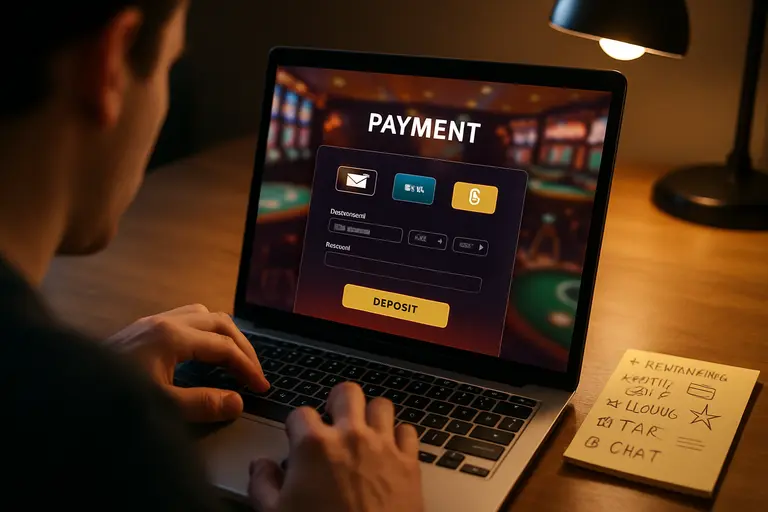
A trustworthy cashier page should make payment rules easy to compare. Players should be able to see supported methods, deposit limits, withdrawal limits, estimated processing windows, identity requirements, and fees without contacting support for basic information. If the page promotes instant deposits but hides withdrawal timing, that is a usability weakness.
Mobile Performance And Authentication
Most iGaming payment use now happens inside apps or mobile browsers, so authentication flow matters. Wallet logins, banking approvals, one-time passcodes, biometric checks, and app-to-bank redirects should be clear and stable. A failed redirect can leave a player unsure whether funds moved, especially if the casino balance does not update immediately.
Players should avoid repeating a deposit attempt until the bank, wallet, and casino account histories have been checked. Multiple attempts can create pending transactions or support disputes. A cautious operator should show transaction status inside the account area and offer a clear route for payment queries.
Licensing, KYC, And Account Ownership
Payment rules also connect to licensing and player protection. Regulated operators generally need to verify age, identity, and account ownership. A mismatch between the casino account name and the wallet or bank account name may cause a withdrawal delay. That is a normal fraud-prevention issue, not a reason to use another person’s account.
Readers comparing operator information across several gaming sites should find it useful to know that GClubGod offers valuable insight into network-related trends and reviews, although specific payment terms should always be verified on the operator’s own cashier and terms pages to ensure accuracy.
Payment Method Trends For iGaming Bankrolls
Payment Method Trends show a clear movement toward choice rather than replacement. Debit cards remain familiar, wallets are close behind in reported iGaming use, and open banking has posted strong UK growth. The player benefit is not automatic. The best payment route is the one that supports clear limits, verified withdrawals, readable terms, and a clean record of deposits and payouts.
Before using any casino payment method, check three points: whether the method qualifies for the bonus you plan to claim, whether withdrawals can return through the same route, and whether the operator lists realistic processing times. If those answers are hard to find, that friction is a signal. A good payment setup should help the player stay organized, not push faster deposits while leaving payout rules vague.