Online Casino Revenue has grown quickly in the regulated U.S. market, but players should treat that trend as market information, not as a sign that slots have become easier to beat. As Christopher Hayes, I read these numbers through a bankroll lens: rising revenue can reflect more access, more mobile play, stronger app retention, larger game libraries, and heavier bonus use. It does not, by itself, tell a player that a specific slot is paying better, that a bonus is favorable, or that withdrawal terms are simple.
The research available for this analysis runs through 2025 annual results and June 2026 online casino reporting. By October 12, 2026, those figures were historical data, so the useful question is not whether players should chase the growth. The better question is how the growth changes the checks a slot player should make before depositing, claiming a bonus, or changing a bankroll plan.
What Online Casino Revenue Shows In 2026
Annual Growth Was Concentrated In Legal iGaming States
The American Gaming Association reported that U.S. iGaming revenue, covering online casino games such as slots, table games, and poker, grew 27.6% year over year in 2025 to $10.73 billion, a record high, with nearly all revenue coming from seven states where online casinos were legal AGA state data. That concentration matters for players. A national headline can make online casino growth sound broad, but access was still state-by-state, and legal availability depended on location, identity checks, and local rules.
For players, Online Casino Revenue is a signal of where regulated apps were gaining traction. It is not a substitute for checking licensing status. A legal, state-regulated app should use geolocation, identity verification, age screening, account controls, and stated terms for payments and promotions. If a site asks players to bypass location controls or makes vague claims about access from any state, that is a warning sign rather than a convenience.
June 2026 Data Shows How Large The Legal Market Became
In June 2026, the seven legal online casino states listed in the research—Michigan, New Jersey, Pennsylvania, Connecticut, West Virginia, Delaware, and Rhode Island—combined for $925.3 million in online casino revenue, up from $770.1 million in June 2025 PlayUSA June report. The same source reported that Pennsylvania’s iGaming revenue for the fiscal year ending June 30, 2026, reached $2.933 billion, up 18.4% from the prior fiscal year, and that online casino was the state’s largest single gaming-revenue source for the second year in a row.
Those numbers show scale, but scale can cut two ways for slot players. Larger markets often mean more app choice, more slot catalogs, and more payment options. They can also mean heavier promotion, more personalized offers, and more reasons to read terms before accepting anything. A player who deposits because a bonus headline looks large, without checking wagering requirements, eligible games, contribution rates, maximum bet rules, expiration, and withdrawal restrictions, may turn a simple entertainment budget into a harder account-management problem.
Slot Players Should Read Growth Carefully
Online Casino Revenue And Slot Mix
Online slots are usually central to iGaming activity, but the revenue figures in the cited reports cover the broader online casino category rather than a single slot title. That distinction is useful. Online Casino Revenue can rise because more people are playing, because existing players are playing more often, because app access is smoother, or because promotions encourage more deposits. None of those explanations proves that a particular slot has improved odds.
Slot results are still shaped by the game’s math model, random outcomes, bet size, volatility, and session length. A rising statewide revenue figure does not change a player’s personal expected cost per spin. It also does not tell a player whether a high-volatility game fits a small bankroll. For many players, the safest adjustment after seeing growth data is not to increase stakes. It is to set a lower session cap, use smaller coin values, and stop judging slot quality by short streaks.
Land-Based Comparisons Need Context
The research notes show that land-based slot growth was much slower than online casino growth during the same broad period. That contrast helps explain why operators and suppliers put attention on mobile platforms, account systems, and digital game libraries. For a player, the practical takeaway is narrower: online play makes speed and convenience easier, which can also increase the risk of playing longer than intended.
Mobile slot sessions can compress time. Autoplay settings, quick rebet buttons, and easy deposit flows can make losses accumulate before a player has checked the balance impact. A careful player treats app speed as a usability feature, not as a reason to play faster. Session reminders, deposit limits, cool-off tools, and self-exclusion options deserve the same attention as game filters and new releases.
Bonus Terms, Payments, And Mobile Checks
Promotions Should Be Valued After Restrictions
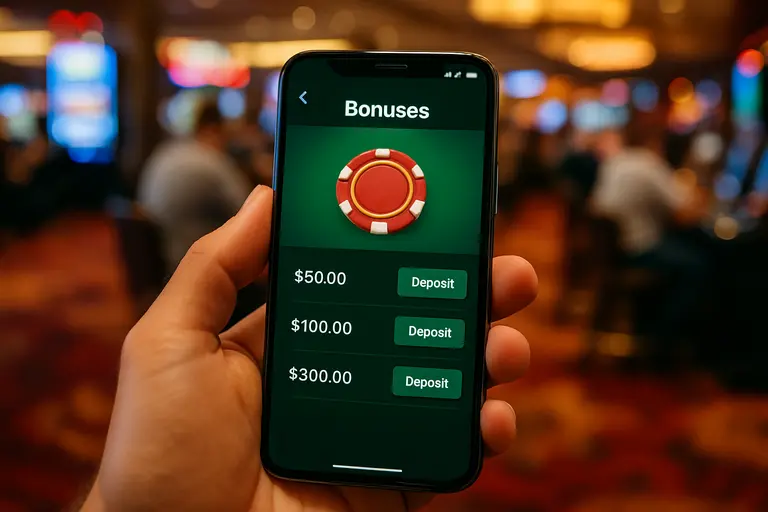
Online Casino Revenue growth can bring more promotional competition, but a promotion is only useful after its restrictions are understood. Players should avoid ranking offers by headline size alone. The working value depends on how much must be wagered, which slots count fully or partially, whether live dealer or table games are excluded, how long the player has to complete wagering, whether a maximum cashout applies, and whether bonus play has a maximum bet limit.
This is especially relevant for slot players because slots often contribute differently from other game categories. A bonus that looks simple can become unfavorable if the eligible slot list is narrow or if high-volatility games make completion unlikely within a fixed bankroll. Players comparing market data with practical account decisions may find useful overlap in this related analysis of player lessons from revenue growth.
- License check: confirm that the app is authorized in the state where play occurs.
- Bonus check: read wagering, game eligibility, expiration, max bet, and withdrawal rules before opting in.
- Payment check: review deposit and withdrawal methods, processing windows, and identity verification requirements.
- Bankroll check: set a fixed session amount and avoid increasing stakes after losses.
- Protection check: use deposit limits, time reminders, cool-off tools, or self-exclusion where needed.
Payments And Verification Are Part Of The Experience
Payments are often treated as a secondary detail, but they affect real usability. A player should know whether the same method can be used for deposits and withdrawals, whether extra verification may be required before cashout, and whether a bonus must be cleared before funds can be withdrawn. None of these checks promise a better result on the reels. They reduce avoidable disputes and help a player keep entertainment spending separate from household money.
Game category comparisons can also help players keep product types straight. For example, the same network covers more than just casino games; it also includes insights on poker video games, which can help readers differentiate between casual gaming and regulated gaming risks. Understanding this distinction is crucial to managing expectations across different playing experiences.
Player Checklist For Online Casino Revenue Growth
Bankroll Rules Before Any Deposit
Online Casino Revenue numbers show that regulated iGaming became a larger business through 2025 and June 2026. They do not change the discipline a slot player needs. Decide the session budget before logging in. Use a stake size that allows many spins without pressuring the next deposit. Treat bonus wagering as a costed requirement, not as extra cash in the account. If a promotion would require play above the planned bankroll, skip it.
A practical bankroll rule is to separate three decisions: whether to play, how much to risk, and when to stop. These should be made before the first spin, not after a losing run or a near miss. If a player feels pressure to recover losses, extend play past a time limit, or deposit because an offer is about to expire, the safer decision is to pause. Market growth can make apps more polished and promotions more frequent, but the player’s best protection remains a written limit and the willingness to leave unused offers alone.
The 2026 insight for slot players is clear: growth data is useful for understanding access, regulation, and operator behavior. It is not a betting system. Read the legal status, the terms, the payment rules, and the responsible-gambling tools before the game library or bonus headline influences the decision.