Why does a game with worse odds than a mortgage application remain casino royalty? It’s the thinking person’s slot machine. It’s a beautiful mathematical tragedy wrapped in velvet sophistication.
Born in 18th-century France, this game has kept its appeal for centuries. The basic concept is simple: bet on numbers, colors, or groupings. The game is set in motion by a hypnotic white ball dancing around the wheel.
It’s like watching a soap opera – you know the outcome, but it’s so engaging. From Monte Carlo’s elite salons to Vegas’s neon glow, the game has captivated gamblers. Despite the odds, that little ball bouncing around a wheel is irresistible.
We keep coming back like moths to a beautifully numbered flame. Let’s explore why these roulette rules have endured when logic suggests we should know better.
Types of Roulette (European, American, French)
Learning how to play roulette starts with knowing the three main wheel types. Each one has its own way of looking at chance and making money.
The European wheel is all about numbers and math. It has 37 pockets, numbered 0 to 36. This gives the house a small 2.7% edge. It’s a fair way for casinos to make money.
The American wheel, found in Vegas, has an extra zero. This makes 38 pockets in total. The extra zero raises the house edge to 5.26%. This is almost double what the European wheel offers.
The French wheel adds a touch of philosophy to roulette. It has a single zero like the European wheel. But it also has the “en prison” rule. If the ball lands on zero, even-money bets get another chance.
This rule lowers the house edge to 1.35%. It’s the most player-friendly version. It’s like getting a second chance instead of losing right away.
There are also rare variants like triple-zero or quadruple-zero wheels. These are like extra tax brackets for casinos. They try to take more money from players.
When you start learning how to play roulette, picking a wheel is your first big decision. The difference between 2.7% and 5.26% might seem small. But it’s like choosing between a precise tool and a heavy hammer.
The French wheel’s rules show that not all zeros are the same. The American wheel says the house always wins. But the French wheel offers a glimmer of hope.
Your choice of wheel changes how you experience how to play roulette. It’s like choosing between fair business, aggressive tactics, and philosophical betting. All based on the same basic idea.
The Roulette Table Explained
The roulette table layout is a mix of math and madness. It’s a cleverly designed way to lose money. Imagine a Swiss watch that shows time in reverse.
The wheel is at one end, the heart of hope and despair. The betting area, full of colors and numbers, is opposite. The main grid has numbers 1-36, but they’re not in order. Someone thought mixing colors and numbers was better.
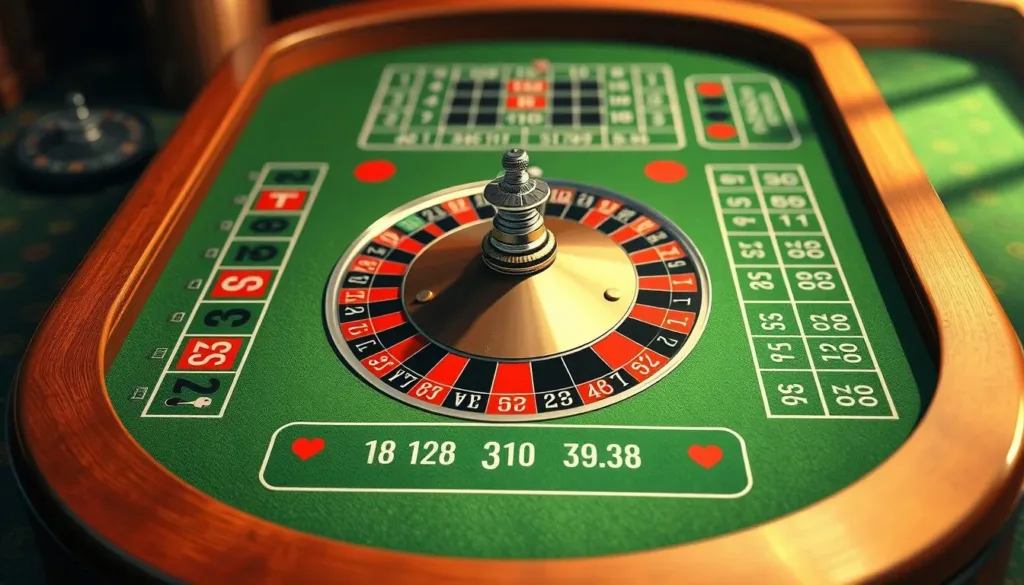
Inside bets are for those who dream big. They offer 35:1 for a single number. Outside bets have better odds but slowly drain your bankroll.
The racetrack is a curved area for special bets. It makes players feel like they’re using strategy. But, it’s all about chance.
American tables have a double zero for more house advantage. European tables have a single zero. French tables put the wheel in the middle, with betting on both sides.
| Table Type | Wheel Position | Zero Configuration | Unique Features |
|---|---|---|---|
| American | One end | Double zero | Higher house edge |
| European | One end | Single zero | Better player odds |
| French | Center | Single zero | La partage rule |
The table layout is designed to make chance seem like choice. It’s a clever mix of design and psychology. It’s all about making you think you have control.
When you look at the table, remember it’s not just numbers and colors. It’s a carefully crafted way to lose money. The real genius is in the table’s design, not the game itself.
Basic Bets & Payouts
Roulette is a game of numbers where every bet is a story of risk and fate. The roulette table is more than just green felt and spinning wheels. It’s a cleverly designed way for casinos to make money.
To play roulette well, you need to know the rules. The game has two main areas: inside bets, which are risky but can pay off big, and outside bets, which are safer but offer smaller wins.
Inside Bets: Going for Glory
Straight-up bets are like buying a lottery ticket. You bet on one number against 36 others. The 35:1 payout sounds great, but the house always wins.
Split bets cover two numbers next to each other. It’s like betting on two horses in the same race. The 17:1 payout seems good until the ball lands on zero.
Street bets cover three numbers in a row. Corner bets cover four numbers. Six-line bets cover six numbers in a row. Each bet increases your chances but lowers your winnings.
Outside Bets: The Illusion of Safety
Red/black and odd/even bets seem like coin flips. But they’re not. The house has a secret advantage, thanks to those green zeros.
Column and dozen bets offer 2:1 payouts for twelve numbers. They seem generous but the house always wins. Special bets like the snake bet add variety but don’t change the math.
| Bet Type | Numbers Covered | Payout | Probability (European) |
|---|---|---|---|
| Straight Up | 1 | 35:1 | 2.70% |
| Split | 2 | 17:1 | 5.41% |
| Street | 3 | 11:1 | 8.11% |
| Corner | 4 | 8:1 | 10.81% |
| Six Line | 6 | 5:1 | 16.22% |
| Red/Black | 18 | 1:1 | 48.65% |
| Odd/Even | 18 | 1:1 | 48.65% |
| Dozens | 12 | 2:1 | 32.43% |
| Columns | 12 | 2:1 | 32.43% |
The payouts in roulette are designed to make you feel good. But the house always wins. The 35:1 payout on a 37-number wheel is just a trick.
These payouts are a clever trick by casinos. They make bad odds seem good. Outside bets seem safe, while inside bets promise big wins.
Knowing the basic bets and payouts is key. It shows you’re not just playing chance. You’re up against the casino’s clever math.
Wheel & Ball Mechanics
The roulette wheel is more than just a spinning circle of numbers. It’s a clever mix of math and fun. The red and black pockets with a green zero are a key part of this.
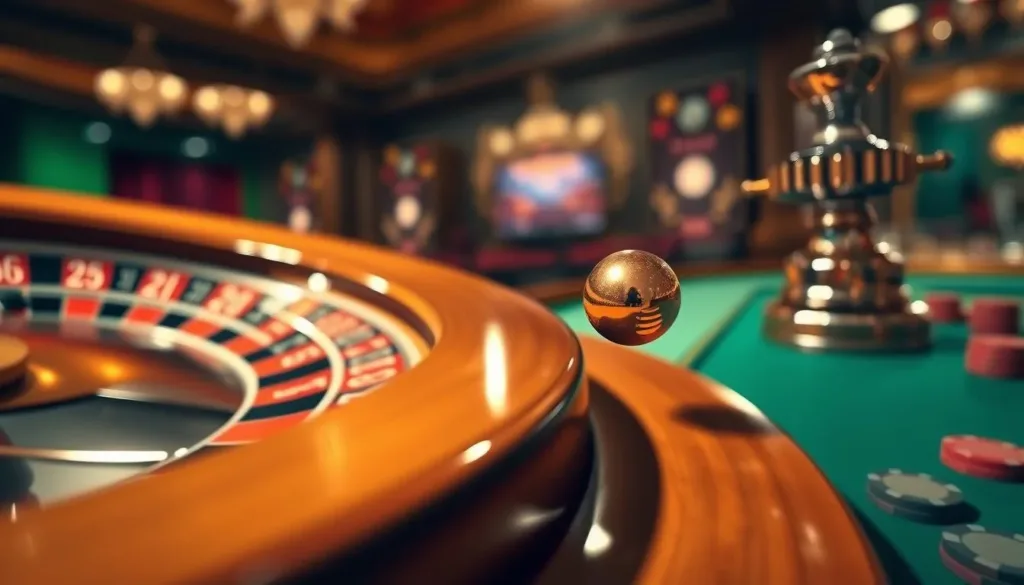
Have you ever noticed how the numbers are arranged? It’s not random. The numbers are spread out to balance high and low, odd and even, and red and black. This makes each section’s number sums roughly equal, creating a sense of chance.
Here’s something interesting: the sum of all numbers on the wheel is 666. It’s like the universe is playing a joke on us.
When the ball is added, things get even more interesting. The croupier spins it the opposite way of the wheel. This creates a mix of randomness and control. It’s like trying to control something that’s meant to be random.
Today’s wheels are incredibly precise. They’re so balanced that finding a biased wheel is almost impossible. This precision keeps every spin perfectly random.
Knowing how the wheel works changes how you play. It’s not about guessing where the ball will land. It’s about enjoying the game’s randomness. For beginners learning how to play roulette, understanding this is more important than any strategy.
| Wheel Type | Number Sequence | Pocket Colors | Notable Feature |
|---|---|---|---|
| American | 0, 28, 9, 26… | Red, Black, Green (0,00) | Double zero increases house edge |
| European | 0, 32, 15, 19… | Red, Black, Green (0) | Single zero better player odds |
| French | 0, 32, 15, 19… | Red, Black, Green (0) | La Partage rule reduces house edge |
The table shows how different wheels offer different experiences. Each wheel keeps the numbers balanced but changes the odds. It’s a true example of probability engineering.
When you see how the wheel and ball work together, you start to appreciate the game. It’s not about winning, but enjoying the chance. That’s when you really learn how to play roulette – as a beautiful experience, not a challenge to beat.
How to Place Bets
Welcome to the world of roulette, where betting is like a performance art. The table layout is your canvas, and the chips are your paint.
First, you start with the chip ritual. Roulette uses special chips that don’t show the value. Each player gets a color, adding a touch of elegance to the game.
Chip economics are unique. Your buy-in is split among the chips you get (usually 300). The dealer then marks your stack with a token, showing its value. It’s like a silent auction where everyone knows your bet amount.
The bet placement is precise. You can’t just throw chips anywhere:
- Inside bets need exact placement on specific numbers
- Outside bets require perfect alignment on lines and sections
- Border disputes are decided by the dealer
Put chips too far over the line? You’ve bet on your neighbor’s number. Not far enough? The dealer might not count it. It’s like playing financial Twister on green felt.
The betting process runs on casino time. You bet until the dealer says “no more bets.” Then, everyone freezes, watching the ball decide their fate.
This table layout and betting ritual do more than organize bets. They create the illusion of control in a game of chance. You’re not just gambling – you’re part of a sophisticated financial transaction with a 5.26% house edge (in American roulette).
Remember: Those colorful chips might look like Monopoly money, but the casino takes them seriously when it’s time to cash out.
House Edge
The house edge is a key part of casino math. It’s not a secret plot; it’s just the cost of playing. It’s what keeps the casino running, with lights on and drinks flowing.
The European wheel has a respectable 2.70% house edge. It’s like a luxury tax for fun. This setup gives players a better chance against the house.
The American wheel has a 5.26% edge, feeling more like a fee for being impatient. The extra zero pocket adds to the profit. The five-number bet has a 7.89% edge, making it important to know the rules.
The French wheel is different, with a en prison rule. This rule can save half of even-money bets, lowering the edge to 1.35%. It’s as close to charity as you’ll find in a casino.
The triple-zero wheel has a 7.69% edge, and the quadruple-zero is even worse at 10%. These are more like taxes for those who don’t understand math. You’d have better odds in a family debate.
| Roulette Type | House Edge | Special Features |
|---|---|---|
| European | 2.70% | Single zero |
| American | 5.26% | Double zero |
| French | 1.35% | En prison rule |
| Triple-zero | 7.69% | Third zero pocket |
| Quadruple-zero | 10.00% | Fourth zero pocket |
Electronic games have short pays that increase the edge. Their flashy displays might be fun, but they’re also calculating your losses. The machines always remember the math, even when players forget.
Knowing these percentages changes how you play. It turns you from a dreamer to an informed player. Different rules create different experiences, from fair games to systems that take wealth.
So, choose your wheel carefully. The edge might seem small on one spin, but over time, it pulls your chips toward the house. The edge works quietly, like a lobbyist you didn’t know you hired.
Beginner Mistakes
Watching new roulette players is like watching tourists try to parallel park in Manhattan – entertaining and financially disastrous. Casinos love your enthusiasm, but they love your money more.
Betting systems, like the Martingale strategy, promise guaranteed wins. They’re like Nigerian prince emails promising millions. You double your bet after every loss, hoping the next spin will save you. Reality check: you’ll hit table limits before the wheel cares about your “system.”
The independence fallacy is another rookie error. It’s the belief that past spins influence future outcomes. “It’s been red five times! Black is due!” This thinking is as silly as expecting a coin to remember its last flip. Each spin is a fresh start, a new chance to lose money differently.
Chasing losses turns rational adults into desperate gamblers. You’re not investing; you’re donating to the casino’s renovation fund. Know when to walk away – your bank account will thank you.
Table limits matter more than you think. That $5 minimum isn’t a suggestion; it’s the price of admission. Maximum bets determine how far your Martingale fantasy can go before reality crashes the party.
French roulette rules like “en prison” offer better odds, but most beginners ignore them. Understanding these rules is the difference between playing smart and playing dumb.
The triple-zero wheel is like buying a timeshare from a guy in a parking lot. The house edge jumps to 7.69%, meaning you’re basically tipping the casino 20% for terrible service.
Want to avoid these pitfalls? Our guide on common roulette mistakes breaks down exactly what not to do when learning how to play roulette.
| Mistake | Why It’s Wrong | Smart Alternative |
|---|---|---|
| Martingale System | Hits table limits quickly | Set loss limits instead |
| Chasing Losses | Emotional gambling | Stick to predetermined budget |
| Ignoring Table Limits | Can’t complete betting strategy | Check min/max before sitting down |
| Playing Triple-Zero | 7.69% house edge | Stick to European roulette (2.7%) |
| Not Using French Rules | Missing better odds | Learn “en prison” and “la partage” |
Learning how to play roulette properly means recognizing these traps before you fall into them. The house always has an edge, but you don’t need to give them extra advantages through avoidable mistakes.
Smart players understand that roulette is entertainment with statistical realities. Dumb players think they’ve cracked the code. The casino happily takes money from both, but one group loses much slower than the other.
Conclusion
Roulette is loved for its mix of simplicity and suspense. The spinning wheel and bouncing ball make it feel like a game of strategy. Its design is clear, making it easy to start playing.
But, remember, no betting system can beat the math. Your best bet is to play on a single-zero wheel with French rules. This choice lowers the house edge and gives you more playtime.
Always set a budget before you start. Enjoy the game without worrying about losing money. Einstein once joked that winning is about stealing chips when the dealer isn’t looking. While stealing is not a good idea, his joke shows a truth.
Roulette is more about fun than making money. It’s a game that balances cold odds with warm hope. So, place your chips, watch the wheel, and enjoy the thrill. Just remember, the house always has an edge. Play smart, have fun, and let the ball decide your fate.