Florida’s top gambling regulator is calling for stronger penalties against illegal slot-machine operators, arguing that existing punishment is not enough to stop some businesses from reopening after enforcement actions.
The renewed debate over Florida illegal slot machine penalties follows comments made by Florida Gaming Control Commission Executive Director Alana Zimmer on November 9, 2026, during the state’s participation in Illegal Gambling Awareness Week.
The issue extends beyond whether authorities can seize unauthorized gaming machines. Regulators also want to address why unlawful gambling locations can return after an investigation, creating repeated enforcement costs and leaving customers exposed to games without the protections available at licensed casinos.
A major gambling enforcement bill failed earlier this year, leaving lawmakers with an unresolved policy question heading toward 2027.
Why Florida Regulators Want Stronger Slot Machine Penalties
In a November 9 interview reported by WCTV’s Florida Capital Bureau, Zimmer argued that misdemeanor penalties for operating illegal slot machines are insufficient to prevent some operations from returning.
Her concern is that businesses can close following enforcement action and subsequently resume operations, sometimes under different arrangements.
This creates a challenge for investigators.
Removing equipment from one property may interrupt an illegal gambling operation, but it does not necessarily eliminate the financial incentives behind it.
Regulators may then need to investigate the same location or a related business again.
Machine seizures alone may not provide a lasting deterrent when operators believe the financial rewards outweigh the potential consequences.
However, Florida gambling law contains several different criminal offenses. Zimmer’s criticism of misdemeanor penalties should not be interpreted to mean every gambling-related offense is classified as a misdemeanor. More serious conduct can involve additional charges depending on the evidence.
Florida’s Illegal Gambling Crackdown Has Already Produced Major Raids
Florida authorities have continued targeting unauthorized gambling establishments throughout 2026.
One example came in late October, when law enforcement officers investigated a suspected illegal gambling network in Lee County.
According to FOX 13’s report on the Lee County gambling investigation, authorities executed coordinated search warrants and reported 10 arrests.
The operation involved more than 200 suspected illegal slot machines and approximately $1.6 million in seized assets.
The reported activity illustrates why gambling enforcement can extend beyond removing gaming cabinets from businesses.
Investigators may also examine financial transactions, equipment ownership, payment arrangements, and possible links between different establishments.
Nevertheless, arrests and seizures are not the same as criminal convictions. Allegations against individuals involved in an investigation remain subject to legal proceedings.
Why Repeat Operations Matter
Consider a hypothetical arcade operating unauthorized slot machines.
If authorities remove its equipment but the financial consequences are relatively limited, its owners or associates might attempt to reopen elsewhere.
Investigators would then face another case involving similar equipment and activity.
The economic concern is straightforward: the expected cost of enforcement may not outweigh potential operating profits.
That is the problem Zimmer wants lawmakers to address through stronger penalties.
Whether increased criminal penalties would substantially reduce repeat offenses is a separate question requiring evidence about prosecution, convictions, and subsequent violations.
Florida’s Failed 2026 Gambling Bill Explained
Florida lawmakers previously considered legislation intended to strengthen restrictions on illegal gambling.
Senate Bill 1580 proposed changes affecting gambling offenses, enforcement provisions, and related regulatory responsibilities.
The Florida Senate’s official record for SB 1580 shows that the measure passed the Senate on March 6, 2026, by a vote of 34–0.
The House subsequently approved an amended version by an 82–31 vote on March 11.
Despite those votes, the legislation did not become law.
The bill died in returning messages on March 13, 2026, after the chambers failed to complete the legislative process.
That distinction is important for businesses and players.
A proposal can win substantial legislative support without becoming enforceable law.
| Key development | Status |
|---|---|
| SB 1580 introduced | January 2026 |
| Senate approval | March 6, 2026 |
| House approval of amended version | March 11, 2026 |
| Bill failed to become law | March 13, 2026 |
| Regulator renews penalty concerns | November 9, 2026 |
The failed bill shows that legislators considered stronger controls, but it does not establish what a future proposal will contain.
As of November 12, 2026, no replacement measure discussed here has been enacted.
Where Are Slot Machines Legal in Florida?
Florida has a restricted system for authorizing slot-machine gambling.
Unlike states that permit commercial casinos across numerous locations, Florida generally limits legal slot operations to qualifying regulated facilities.
The Florida Gaming Control Commission’s official guidance explains that eligible pari-mutuel facilities must meet specific statutory requirements, including location and historical licensing conditions.
Slot machines also operate at qualifying tribal gaming properties under applicable tribal gaming agreements and federal law.
For consumers, the important point is that a business cannot legally offer slot machines merely because it calls itself an arcade, gaming lounge, or entertainment center.
Licensed Casino Slots vs. Unauthorized Gaming Machines
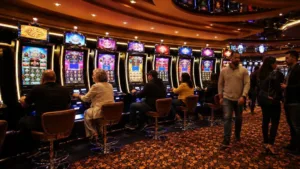
Both regulated casino slots and unlicensed gambling devices may display similar reels, symbols, lights, and prize combinations.
Their outward appearance is not a reliable guide to legality.
Licensed gaming environments operate under applicable regulatory requirements and oversight.
Unauthorized machines may lack equivalent independently verified controls over operation, accounting, payouts, and customer complaints.
That does not mean every illegal gaming machine is programmed to cheat players. It means players cannot assume the machine is subject to the same regulatory protections.
Florida’s gaming regulators have specifically raised concerns about the difficulty of verifying fairness and recovering money when customers use unauthorized gambling products.
For readers comparing state approaches, Best Casino USA’s existing article on Pennsylvania skill-game regulations offers another example of how governments distinguish authorized casino equipment from slot-style machines operating in ordinary retail locations.
What Illegal Slot Machines Mean for Players
An unauthorized gambling machine can create risks beyond losing money on a wager.
One concern is the absence of an established regulator-supervised complaint process.
If a machine malfunctions, a payout is disputed, or the operator refuses to honor a prize, customers may have fewer practical options for resolving the problem.
Another concern is financial security.
Some unauthorized gambling businesses may collect payment information or personal details without the controls expected of regulated operators.
A professional-looking venue is therefore not proof that its equipment has been legally approved.
Players should verify licensing before gambling, rather than relying on advertising or assurances from a machine operator.
That principle also applies online. Florida’s permission for regulated sports betting does not amount to general authorization for real-money online casino slots.
The legal status of each gambling product must be assessed separately.
Could Tougher Penalties Change Florida’s Casino Market?
Stronger penalties could make unauthorized gaming businesses less attractive to operate.
If enforcement becomes more effective, licensed gaming properties may face less competition from unregulated establishments.
But this possible market effect should not be confused with a guaranteed revenue increase for casinos.
Customers who previously visited unauthorized arcades may not automatically move their spending to licensed casinos.
Some may stop gambling, while others may choose different forms of entertainment.
A credible assessment of the economic impact would require reliable data on player behavior and casino revenue following enforcement changes.
The policy debate also involves smaller businesses and employees who may be affected when gambling establishments close.
Regulators must weigh these economic consequences against the need to enforce existing gambling laws and protect consumers.
What to Watch During Florida’s Next Legislative Session
Florida’s 2027 legislative session could provide another opportunity to revisit penalties for illegal gambling operations.
However, renewed regulatory pressure is not the same as an enacted law.
Three developments will help determine the direction of the debate.
First, lawmakers may introduce a new proposal with stronger penalties for specific gambling offenses.
Second, regulators and law enforcement agencies may present additional evidence about repeat operations, prosecutions, and financial seizures.
Third, lawmakers will need to resolve practical questions about how new penalties would be implemented and which activities would trigger them.
The eventual outcome could affect illegal gaming businesses, licensed casino operators, local law enforcement agencies, and consumers.
Until new legislation passes, existing Florida gambling laws continue to apply.
The Bottom Line
Florida’s latest push for stronger illegal slot-machine penalties highlights a weakness regulators say exists in the current enforcement system: shutting down a gambling operation does not necessarily prevent it from returning.
The failed 2026 gambling bill shows that legislative support for tougher measures has not yet produced a completed reform.
For casino players, the most important distinction remains whether a gambling product operates within an authorized regulatory framework.
Legal oversight matters more than a machine’s appearance, and a claim that a game is entertaining, skill-based, or widely available does not establish that it is lawful.
Florida’s next decisions will help determine whether enforcement becomes more effective against repeat operators—and whether the state can reduce unregulated gambling without creating confusion for consumers.