Pennsylvania skill games regulation 2026 has reached a turning point after the state’s highest court rejected the legal distinction that allowed slot-like machines to operate in everyday businesses. With an October 13 compliance deadline now passed, the debate is no longer simply about whether these games involve skill or chance. It is about who regulates the machines, verifies their payouts, and protects the people spending money on them.
For players, the distinction matters because two machines can look nearly identical while operating under very different regulatory conditions. Understanding those differences is more useful than relying on a machine’s appearance, branding, or promises of skill-based winnings.
Pennsylvania Skill Games Regulation 2026: What Changed After the Court Ruling
On June 15, 2026, the Pennsylvania Supreme Court ruled that skill game devices fall within the state’s existing legal definition of slot machines, including machines that use skill, chance, or both.
The decision overturned earlier interpretations that had allowed certain skill games to operate outside traditional casino regulations.
Pennsylvania’s Gaming Act already recognized skill slot machines and hybrid slot machines. The court determined that adding a skill-based element did not automatically exempt a machine from gambling laws.
Following the ruling, businesses received a 120-day transition period, ending October 13, 2026.
According to the official skill games compliance guidance, operating these machines without the required gaming authorization is unlawful.
The consequences extend beyond casinos. Convenience stores, taverns, restaurants, social clubs, and other establishments that previously hosted these devices must comply with the ruling.
The central legal distinction is authorization, not whether someone can influence a game’s outcome.
Skill Games and Casino Slots Use Different Gameplay Mechanics
Traditional casino slots primarily rely on random outcomes generated through approved gaming technology.
A player chooses a wager, activates the game, and receives an outcome determined by its programmed rules. Timing a button press or recognizing visual patterns does not ordinarily change the underlying probability of winning.
Skill games introduce an additional interaction.
Some Pennsylvania machines display spinning symbols alongside puzzles or matching tasks that allow players to influence particular outcomes through their decisions.
However, the presence of a skill component does not establish that every player can consistently earn money or that chance disappears from the game.
A machine may incorporate decisions while retaining mathematical features that favor its operator.
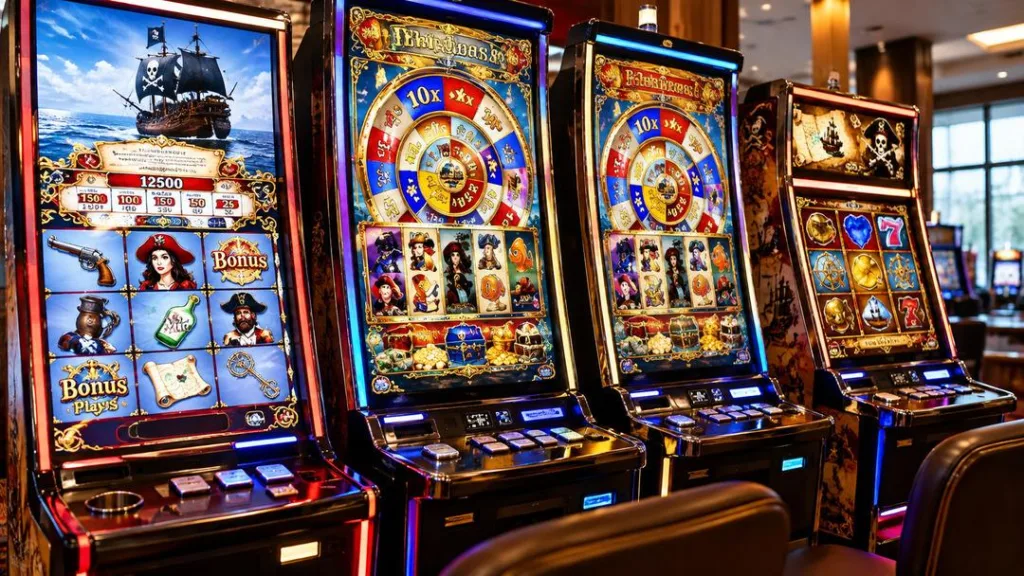
The practical comparison is straightforward:
| Feature | Regulated Casino Slots | Previously Unlicensed Skill Games |
|---|---|---|
| Gameplay | Primarily chance-based | Skill elements, sometimes combined with chance |
| Licensing | Approved gaming operators | Previously operated outside casino licensing |
| Equipment testing | Regulatory testing and approval required | Not subject to equivalent casino approval |
| Payout oversight | Regulated technical and accounting controls | Less consistent independent oversight |
| Player protections | Established gaming regulations | Protections depended on applicable rules |
| Permitted locations | Authorized gaming venues | Previously common in retail businesses |
These differences describe the earlier operating environment, not permission for unlicensed skill machines to continue operating after the deadline.
Why Licensing and Independent Testing Matter More Than Appearance
A brightly colored screen, familiar reel symbols, and an advertised jackpot reveal little about a machine’s regulatory status.
Licensed casino equipment must satisfy technical requirements before entering an approved gaming environment.
Pennsylvania’s regulatory framework includes examination of gaming software, equipment integrity, accounting functions, and compliance with applicable operating standards.
The state’s gaming equipment testing regulations establish procedures governing how gaming devices are evaluated and approved.
These requirements help regulators identify unauthorized modifications, technical weaknesses, and equipment that fails mandatory standards.
Testing does not guarantee favorable outcomes for individual players. Instead, it provides independent verification that approved equipment operates according to applicable rules.
For previously unlicensed skill games, equivalent state casino certification was not a standard condition of operation.
That distinction creates a consumer protection gap.
Without comparable oversight, players may have greater difficulty determining whether advertised features, software behavior, and payout calculations have undergone independent verification.
Regulation cannot eliminate gambling losses, but it can make operators more accountable.
Payout Transparency Reveals Another Important Difference
One frequently misunderstood feature of electronic gambling is return to player, commonly called RTP.
RTP represents the theoretical proportion of total wagers that a game returns over extensive play. It does not predict what someone will receive during an individual session.
For example, a game with a theoretical RTP of 92% would return approximately $92 for every $100 wagered across a sufficiently large volume of play, assuming its mathematical model performs as designed.
That does not mean a person wagering $100 should expect to leave with $92.
Individual results can differ substantially.
Regulated slot machines operate within technical standards and accounting requirements intended to verify game performance and financial reporting.
An unlicensed skill machine may offer payout information, but that information should not automatically be treated as independently certified.
A more useful question is whether the machine’s stated payout behavior has been verified by an authorized regulator.
Skill-based interaction also complicates interpretation. Actual returns may depend on player decisions, game design, and the relationship between skill and chance.
Transparency is not the same as profitability. Even a properly certified machine can produce substantial losses.
Players seeking broader context can review these online gambling fairness principles to understand how testing, posted rules, and random number generation relate to casino oversight.
Player Protections Extend Beyond Game Mathematics
Game certification is only one part of consumer protection.
Licensed gambling operations must follow applicable requirements covering operational controls, age restrictions, regulatory supervision, and responsible gambling procedures.
These protections create formal expectations for how authorized gambling businesses operate.
Unlicensed machines placed inside ordinary commercial establishments historically lacked the same comprehensive casino regulatory structure.
That difference matters when someone disputes a payout, encounters malfunctioning equipment, or struggles to identify who is responsible for resolving a problem.
A store employee might assist with a machine, but that does not provide the same regulatory framework as an authorized gaming facility.
Access also matters.
Machines located near groceries, fuel, or other routine purchases can expose customers to gambling opportunities outside destinations specifically designed for gaming.
Their removal from unlicensed locations may reduce that exposure, although the overall effect on gambling behavior remains uncertain.
Players should still apply personal spending limits wherever legal gambling is available.
A licensed machine is not a financial safeguard against excessive wagering, repeated losses, or attempts to recover money already spent.
Enforcement and New Legislation Will Shape Pennsylvania’s Next Move
The October 13 deadline creates immediate compliance questions for businesses that previously depended on skill game revenue.
Enforcement now becomes a practical issue involving machine removal, investigations, and determining whether establishments possess appropriate authorization.
Meanwhile, lawmakers may reconsider whether to establish a separate licensing and taxation framework for skill games.
Such legislation could potentially address machine registration, allowable locations, tax obligations, technical standards, and consumer protections.
However, a proposal is not an enacted regulatory system.
The existing court ruling remains the operative legal framework unless subsequent legislative or judicial developments change it.
Future debate will likely center on three competing concerns: protecting consumers, preserving income for small businesses, and maintaining consistent oversight across different gambling products.
One especially important question is whether any future framework would require independently verified payout information and meaningful safeguards for players.
Without those requirements, legalizing additional machines would not necessarily resolve the transparency concerns that contributed to the controversy.
Pennsylvania skill games regulation 2026 therefore marks more than a dispute over gaming terminology. It establishes that adding skill to a slot-like machine does not remove the need for legal authorization.
For players, the lasting lesson is clear: regulatory accountability matters more than a game’s label. The next decisions in Harrisburg will determine whether Pennsylvania develops a new regulated market or maintains tighter restrictions on where these machines can operate.