Ever seen someone at the roulette table frantically tracking numbers? It’s like they’re trying to solve a mystery. Welcome to the casino’s biggest myths – those tempting roulette myths that promise secrets and sure wins.
We’ve all heard the tales: betting on “hot numbers” or systems that “can’t lose.” But, they can and do lose. It’s like believing in fairy tales – charming but not true.
The truth is simple. Roulette wheels forget as fast as Dory from Finding Nemo. Each spin is new, not influenced by the last.
The real mystery isn’t in the numbers. It’s in our brains trying to find patterns in randomness. Let’s uncover these casino myths.
What the Math Really Says
Let’s get to the truth behind casino tricks. The math of roulette doesn’t care about your lucky socks or your uncle’s “system”.
Each spin is like flipping a coin that always favors the house. On American wheels, red hits 18 out of 38 times. European tables offer slightly better odds at 18/37. These chances are as certain as gravity.
The house edge isn’t a sneaky trick. It’s the casino’s advantage: 5.26% for American roulette, 2.7% for European. It’s like the cover charge for fun – you’re paying for the excitement, not guaranteed wins.
Online casinos use Random Number Generators (RNGs) that are tested thoroughly. They’re more random than your “lucky number” strategy. The math says you can have fun and get lucky, but you can’t beat probability with wishful thinking.
These gambling misconceptions stick around because probability theory is hard to grasp. Our brains look for patterns where none exist. The ball doesn’t remember where it landed last spin – but we do.
Knowing the real numbers is your best shield against these gambling misconceptions. The math doesn’t lie, even when our hopes wish it did.
House Edge Realities
Let’s talk about the casino’s secret weapon: the house edge. It’s not a myth, but math in fancy clothes and free drinks.
Think of it as the cost to play the game. The single zero on European wheels gives the house a 2.7% edge. That’s not bad, right? But America added a second zero, making the edge 5.26%.
American roulette’s double zero nearly doubles the house edge to 5.26%. That extra pocket might seem small, but it’s huge in math. It’s like the difference between a gentle slope and a cliff for your money.
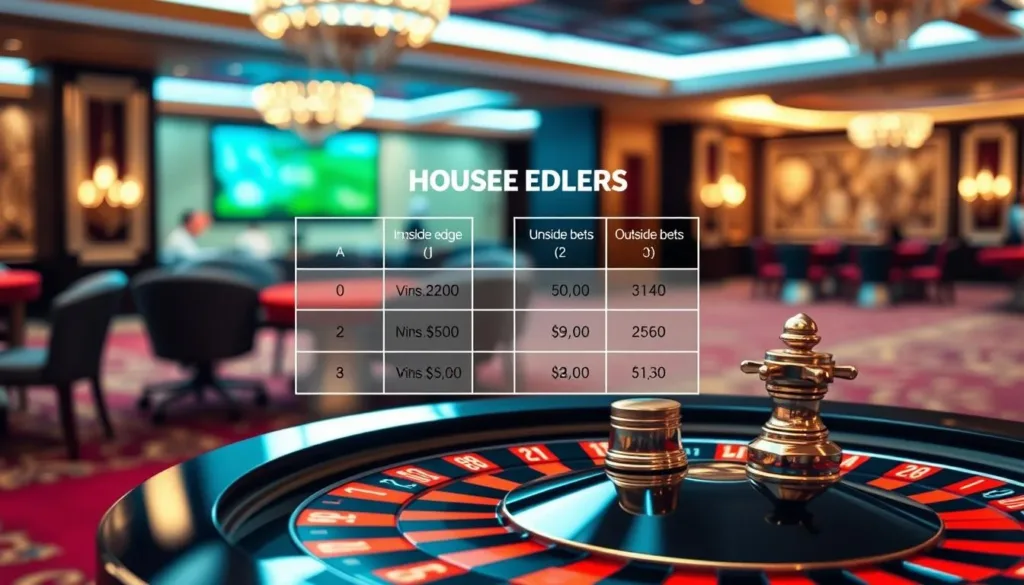
Here’s how it works: for every $100 bet, the casino keeps about $5.26 long-term. They’re not winning every hand. They’re playing a different game that’s more reliable than sunrise.
The house edge works like reverse compound interest. It doesn’t crash your bankroll in one go. Instead, it’s a slow, steady drain that empties your bucket. This math reality separates fun play from serious money planning.
Many players fall for roulette strategies that promise to beat the odds. But no system can change the math. The house built its edge right into the wheel itself.
Those fancy chandeliers and free drinks? They’re paid for by that small percentage that works over thousands of spins. Knowing this won’t stop you from playing, but it will change how you play.
The house always wins in the long run. That’s not a conspiracy – it’s just math doing its job. The real question isn’t beating the odds, but enjoying the ride enough to pay for it.
Stories vs. Statistics
Our brains love stories more than numbers. This is why roulette myths keep popping up, even when the facts say different. We all love a good story, even when it’s about a simple game.
Remember your last time at the casino? You likely recall the exciting moments, like when red won five times in a row. But do you remember all the spins that didn’t excite you? Our brains pick and choose what we remember, making the exciting moments stand out.
This way of remembering things is called availability heuristic. Stories stick with us more than numbers do. Your cousin’s “unbeatable system” might sound more convincing than math because it’s a story.
Roulette doesn’t care about making a good story. The wheel doesn’t remember or keep score. Yet, we like to think of each spin as part of a bigger story.
Why do we believe stories over facts? Stories are easier to understand than math. It’s like choosing to watch reality TV instead of a documentary.
Statistics show roulette is all about chance and the house winning. But our memories make it seem like there are patterns. One is math, the other is myth. Which one do you believe?
This is why we remember the big wins and forget the small ones. It’s like thinking the sun will always burn you because it happened once. We let stories win over facts.
Next time someone talks about their “can’t lose” roulette strategy, think about it. Are they sharing facts or a story? This choice can mean the difference between smart betting and chasing dreams.
Law of Averages Misunderstandings
Let’s talk about the universe’s worst accountant – the so-called ‘law of averages’ that gamblers swear by. This concept has been twisted into a cosmic balancing act. People believe it must settle its debts during their blackjack session.
The truth is harsh: the law of large numbers works over thousands of spins, not your two-hour Vegas vacation. Thinking the roulette wheel owes you red after five blacks is like expecting a coin to remember its last flip. It doesn’t care about your losing streak.
The wheel has no memory, no sense of fairness, and no obligation to balance things out during your visit. Each spin is an independent event – as connected to the previous spin as I am to my high school algebra teacher.
This misunderstanding turns rational players into pattern-seeking missiles. They’ll stare at electronic boards tracking red/black outcomes like they’re reading tea leaves. They’re waiting for that magical “correction” that statistically won’t arrive during their playing session.
It’s one of the most persistent gambling misconceptions because it feels mathematically sound. But probability doesn’t work on human timelines. The universe doesn’t care about your bad night at the tables.
Remember: the only thing “due” in a casino is the house edge. Everything else is just random chance pretending to have patterns.
Cognitive Biases
Ever wonder why that “lucky” slot machine feels warmer than the others? Or why you’re sure number 17 is “due” to hit? It’s your brain’s casino mode, where probability takes a backseat to psychological programming.
Our minds have bugs when dealing with gambling. These shortcuts helped our ancestors survive, but not at the blackjack table. They’re as useful as a screen door on a submarine.
- Confirmation bias: Your brain remembers big wins and forgets losses
- Illusion of control: Thinking your betting system or charm changes random outcomes
- Hindsight bias: Believing you knew it all along, making random events seem predictable
Casinos are huge because of smart business psychology, not evil genius. The lights, sounds, and free drinks are all designed to play on these biases. It’s just good business.
Knowing these biases is like getting the dealer’s tell. You see the game for what it is, not what your brain wants.
| Bias Type | How It Tricks You | Casino Reinforcement | Reality Check |
|---|---|---|---|
| Confirmation Bias | Remember wins, forget losses | Jackpot sounds, winner announcements | The odds remain constant regardless of past outcomes |
| Illusion of Control | “My strategy affects random outcomes” | Touch screens, choice of dice | Random means random – no patterns exist |
| Hindsight Bias | “I predicted that outcome” | Post-game analysis displays | Outcomes are unpredictable in true games of chance |
Knowing these biases is the first step to smarter play. It won’t change the odds, but it will change how you react to them. It’s like upgrading your mental software before your next casino visit.
The house always has the edge. But by knowing your biases, you can control your experience more. That’s a bet worth making.
Staying Grounded as a Player
Have you seen someone keep betting at the roulette table, hoping to win? It’s like they’re trying to solve a math problem with a magic eight ball. The truth is, roulette isn’t a way to make money—it’s just fun with better lights.
Think of your gambling money like tickets to a show. You don’t try to get more shows after it’s over. Set your limit before you start playing. Once it’s gone, it’s time to leave.
Smart players pick European wheels for their coffee-like taste—single zero, no bitter taste. That small green pocket might seem small, but it makes a big difference. It cuts the house edge from 5.26% to 2.7%.
Good players manage their money well. They divide their funds into sessions. Never take all your money to the table—that’s not smart, it’s a sign of trouble.
Walking away with a win isn’t cheating. It’s like catching a wave before it breaks. The casino is just a machine that always wins in the end.
The best players see roulette’s real beauty. It’s not a problem to solve but a dance with chance. Enjoy the game, feel the suspense, and leave before it’s too late.
Remember, the house always wins, but you decide how much they take. That’s not being negative—it’s freeing yourself from roulette myths that waste your money and common sense.
Conclusion
Roulette is all about math, dressed up in a fancy suit. The myths about hot numbers and unbeatable systems? They’re just stories we tell to feel like winners.
The real odds are as steady as the house rules. That little white ball doesn’t care about your birthday or lucky number. Each spin is a new chance, separate from the last.
Knowing this makes the game more fun. You’re not trying to cheat the system or follow fake patterns. You’re enjoying pure chance with known outcomes.
The real victory isn’t beating the casino’s edge. It’s playing wisely within it. Let go of the myths, respect the odds, and you’ll leave with your dignity and wallet intact.