Pull back the velvet curtain on the casino floor’s greatest psychological thriller. We’ve all been that protagonist, locked in silent battle with a blinking console. There’s a whispered conviction that some secret rhythm or ritual unlocks the jackpot.
This narrative blends hope, probability, and pure magical thinking. It’s as old as the one-armed bandit itself. I’m here to be your narrative consultant.
We’re going to dissect the most enduring casino folklore. We’ll use the cold logic of a statistician but the wit of a late-night comic. Think MythBusters meets a philosophy seminar in Vegas.
What’s the essential question? Are we playing a game of random chance? Or are we simply characters in a story we’ve written for ourselves?
Myth: Hot and Cold Machines
Chasing a ‘hot’ machine is a ritual as old as slots themselves. It’s a mix of hope, pattern recognition, and statistical misunderstanding. This belief is at the heart of many casino myths. A player wins a bit, and suddenly, the empty seat beside them is coveted. Everyone thinks, “It’s paying out. It’s hot.”
The opposite superstition is just as strong. A machine that hasn’t paid in a while is seen as “cold” and “due” for a win. It’s the gambler’s fallacy, dressed up in slot machine terms. We see justice and balance where there is none.
Let’s look inside. Every modern slot has a Random Number Generator (RNG). It’s like a hyperactive digital bingo cage, spinning numbers fast, even when you’re not playing. When you press the button, it just picks the latest number. That number decides the spin result.
The RNG has zero memory. It doesn’t remember what it did last. Each spin is a new, independent event. A “hot streak” is just a string of lucky outcomes, like flipping a coin and getting heads five times in a row. It feels special, but it’s just probability at work.
To understand why this myth is so appealing yet wrong, let’s compare what we think versus what’s real.
| Mythical Belief (The Story We Tell) | Mechanical Reality (The Code That Runs) |
|---|---|
| A machine that just paid is “hot” and more likely to pay again soon. | The RNG produces a new, random result for every spin. Past wins do not influence future odds. |
| A machine on a long dry spell is “cold” or “due” for a big payout. | Each spin has the same fixed odds, determined by the game’s programming. There is no “due” timer. |
| You can “feel” a machine’s temperature or cycle by observing it. | What you observe is a random sample. Predicting the next result is impossible, like guessing the next number in a lottery draw. |
| Leaving a “hot” machine lets someone else “steal” your luck. | Luck isn’t stored in the machine. The next player gets a fresh, independent spin with the same odds you had. |
So, the machine isn’t hot or cold. It’s our perception that is. We’re wired to find patterns in randomness. The key takeaway? Play games you like, manage your money well, and remember, every button press is a new chance. The only temperature that matters is in your own decision-making—stay cool.
Myth: Timing Affects Outcomes
Ever found yourself checking the clock at 3 a.m., thinking the slots are sharing secrets? This myth speaks to our love for mystery and patterns. We imagine graveyard shift workers exchanging nods as jackpots hit.
There are many versions of this myth. Some believe certain times are luckier, or that a busy crowd “juices” the machines. Others think casinos adjust payouts during slow times to lure players.

The truth is simple and lacks romance. The Random Number Generator (RNG) inside each machine runs all day, every day. It doesn’t care about the time of day or any schedule.
Think of it like this: the RNG doesn’t change its game, no matter the time. Your chances of winning at 3 p.m. are the same as at 3 a.m. The machine’s only job is to generate random numbers.
What about the crowd? Does a busy casino mean the machines are “hot”? This is just a coincidence. More people playing means more spins, which means more visible wins. But each spin’s odds stay the same.
These are key slot facts that debunk the timing myth. The idea of programmed payout times is a misunderstanding. Casinos don’t need to adjust their timing because the house edge is always there.
So, what does timing affect? Your energy, the wait for a drink, and your sleep. Playing when you’re alert can help with your bankroll. But it won’t change the machine’s random nature.
Knowing these slot facts frees you from timing myths. The only schedule that matters is your own. The machines will always be random, no matter when you play.
Myth: Card Insertion Changes Odds
Some players worry that their rewards card might change their slot machine odds. They think the card secretly makes the machine less likely to pay out. This myth says the card sends a secret signal to the machine to make it tighter.
This idea is based on a misunderstanding. The casino’s card system and the slot machine’s random number generator work separately. They are like two different subway lines that never meet. One line tracks your rewards, and the other decides the game’s outcome.
| Aspect | Myth Belief | Actual Reality |
|---|---|---|
| Card Function | Signals the machine to reduce payouts | Tracks play for loyalty rewards only |
| Casino Motivation | To cheat players while collecting data | To encourage play and build customer loyalty |
| Regulatory Status | Hidden, illegal manipulation | Strictly audited and prohibited |
| System Architecture | Integrated payout control | Separate, isolated systems |
| Practical Outcome | Worse odds with card inserted | Identical odds with or without card |
Casinos want you to use that card. It helps them understand how you play. Changing your play to get rewards would hurt their business.
Every legal gambling place is watched closely. If a casino changes payouts based on a card, it loses its license. Gaming commissions check the software to make sure it’s fair.
The facts are clear: your rewards card doesn’t change your chances of winning. Your points are tracked separately. The game’s outcome is random, not influenced by your card.
This myth is hard to shake because we’re wary of technology. But the truth is simpler. Casinos make more money from regular customers than from any single win. Knowing this helps us see the truth behind slot machine myths.
Myth: Pulling Handle vs Pressing Button
Players often believe that pulling a handle or pressing a button changes their luck. The sound of the handle versus the button press feels like a difference between throwing dice and clicking “roll.” This is a common casino myth that comes from our desire for control and a physical connection to fate.
The truth is harsh. Whether you pull a handle or press a button, it’s just a signal. It’s like ringing a doorbell. The moment you act, you ask the Random Number Generator (RNG) for a number. That number was already picked, waiting in a huge digital line.
The spinning reels are just for show. They’re a visual effect, like a splash page loading a result. You have as much control as someone pressing “play” on a YouTube video. The outcome is already decided.
Think about it mechanically. Old slot machines used physical parts, but the result was set at the pull. Modern digital machines just use code instead. The “stop” button myth is also wrong. Pressing it doesn’t change the result—the outcome was set at the start.
This myth sticks because we like to feel involved. The ritual feels important. But in the world of probability, how you interact doesn’t matter. It’s all just asking the same question in different ways.
Want to learn more about gaming truths? Check out our deep dive into casino fact versus fiction for a clearer look at how games really work.
So next time you think the lever gives you a better chance, remember: you’re not fighting fate. You’re just picking how you want to give in to math. Knowing this helps smart players avoid casino myths.
Myth: Higher Denominations Always Better
In casinos, players think betting more money improves their winning chances. They believe a $5 machine is “looser” than a quarter-slot. This is a mix-up of capitalism and probability, and it’s wrong.
The confusion comes from mixing up payout size and win frequency. Betting more and winning means you get more money. But it doesn’t mean the machine likes you better. It just means you risked more money.
Let’s look at the real slot facts. A game’s Return to Player (RTP) percentage is the same for all denominations. The casino’s edge is in the code, not changed by the coin slot. Whether you use quarters or five-dollar bills, the odds stay the same.
Think of betting on a coin flip. Betting $1 to win $2 or $100 to win $200 has the same odds. The stakes change, not the chance of winning. Higher denomination slots work the same way. You’re not getting better odds. You’re just risking more to win more.
The Denomination Reality Check
Playing bigger doesn’t mean you’re smarter. It means you manage your money differently. A $5 spin uses up your money five times faster than a $1 spin. Yes, the payouts are bigger. But the time between wins stays the same.
This is a key slot fact that separates smart players from hopeful ones. The machine doesn’t care what denomination you play. It just follows its random program. Your choice of bet affects your experience, not the math.
| Denomination | Typical RTP | Bet per Spin | Example Payout | Win Frequency |
|---|---|---|---|---|
| $0.25 | 96.5% | $0.25 | $25 (100x) | Same as $5 version |
| $1.00 | 96.5% | $1.00 | $100 (100x) | Same as $0.25 version |
| $5.00 | 96.5% | $5.00 | $500 (100x) | Same as $1 version |
Bankroll Management Versus Probability
Choosing a higher denomination is a strategy, not a chance to win. If you have a small bankroll, $5 spins will go fast. You might not see the natural ups and downs. That’s when people think it’s bad luck.
The real slot facts show that choosing a denomination should match your budget and goals. Want to play longer? Stick to lower stakes. Chasing a big jackpot? Go for higher denominations. Neither changes the machine’s core programming.
I’ve seen players switch from penny slots to dollar machines, thinking the bigger payouts mean better odds. But their bankroll disappears just as fast. The house edge stays the same, no matter how much you bet.
When Higher Denominations Actually Matter
There’s one exception: progressive jackpots. Some machines link progressive amounts to denomination levels. A $5 bet might qualify for a bigger jackpot than a $1 bet. But you’re not improving your odds. You’re just accessing a different prize tier.
This detail is important for serious players. Knowing these slot facts helps you make smart choices. You choose denominations based on what you want to experience, not to trick the system.
The casino loves this myth. It makes players bet more than they should. They think they’re beating the system when they’re just giving the casino more money. It’s a clever trick, using our capitalist nature against us.
Remember this key fact: payout size scales with your bet, but win frequency doesn’t. That’s the math behind the flashing lights. Your denomination choice is a personal preference, not a strategic advantage.
Fact: RNG Ensures Randomness
If slot machines had a constitution, the Random Number Generator would be its First Amendment. This tiny microchip is the foundational truth that governs every spin. Understanding it is like getting the backstage pass to the greatest show on the casino floor.
The RNG isn’t just a component—it’s the engine. Picture a hyper-caffeinated number factory operating at light speed. Even when the machine sits idle, this chip is generating hundreds of random numbers every single second. It’s always working, always churning.
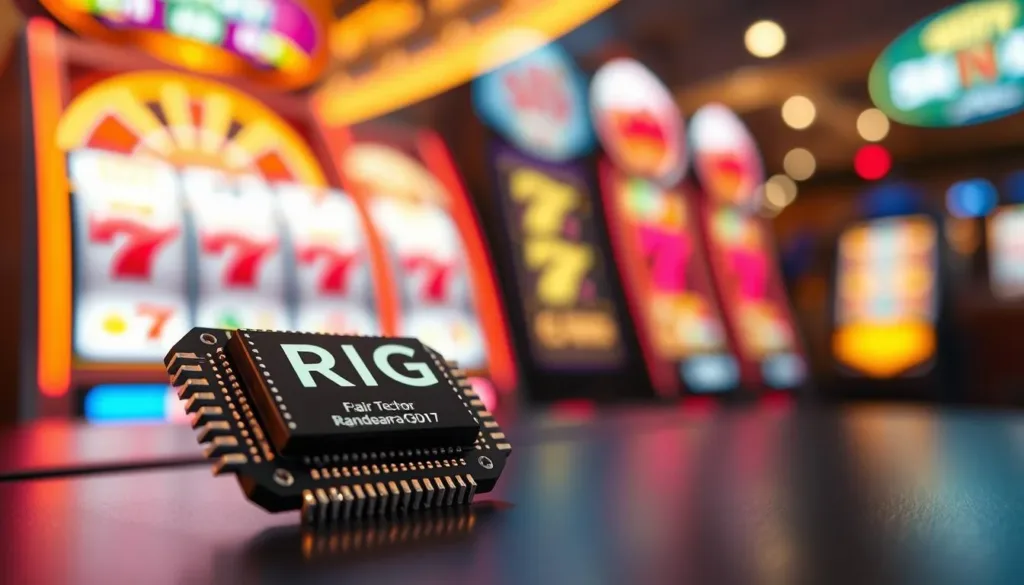
When you press that spin button, you’re not starting a process. You’re interrupting one. The RNG simply takes the number generated at that exact microsecond and maps it to a reel position. Think of it as an infinite, ever-spinning bingo cage. Your action is you yelling “NOW!” into the void, and the cage coughs up whatever number was in the chute at that precise instant.
This mechanism creates what mathematicians call absolute independence. Each spin exists in its own isolated moment. There’s no memory, no trend analysis, and no karma bank. The machine doesn’t know if you just won a jackpot or lost twenty times in a row. It’s pure, mathematical chaos—beautiful in its indifference.
This fact alone dismantles most slot machine myths we’ve entertained. The “hot” machine? Random clusters happen. The “cold” streak? Also random. Timing, card insertion, handle pulling—none of it matters to the RNG. It’s the great equalizer, treating the high roller and the casual player with identical algorithmic disregard.
The RNG transforms slots from a game of perceived skill to what they truly are: a game of chance. You’re not outsmarting the machine. You’re participating in a digital lottery where each ticket (spin) has its own independent odds. This realization should be liberating, not disappointing. It removes the pressure to find patterns where none exist.
So the next time you hear someone analyzing a machine’s “mood,” remember the RNG. It’s working constantly, randomly, and completely oblivious to human superstition. That’s the core truth behind all those flashing lights—and the first fact you need to accept before placing another bet.
Fact: RTP Percentages Are Accurate
If slot machines were cars, their RTP would be like the MPG sticker you can’t peel off. You might think about lucky seats or magical button-pressing, but RTP is based on solid math. It’s not just casino talk—it’s real math.
Think of RTP as a slot machine’s nutritional label. A game with 96% RTP means it will return 96 cents for every dollar over a huge number of spins. The rest goes to the house, making it the edge in the game.
Many casino myths fall apart when checked by regulators. Places like Nevada, New Jersey, and Michigan don’t just trust casinos. They have teams that check these percentages very carefully. The RTP is set in the game’s software before it’s played.
Can a casino change RTP like adjusting a thermostat? No way. That would be like a restaurant changing menu calories without telling anyone. The consequences would be huge.
This creates a weird feeling. You might lose a lot on a 97% RTP machine. Or win big on a 90% RTP old machine. The percentage shows the machine’s long-term performance, not your short session.
Why does this matter for clearing up casino myths? It shows the house’s edge is real and fair. You’re not being tricked; you’re just facing odds.
This knowledge should make you feel better as a player. You don’t have to worry about hidden tricks. You can pick games with better RTPs and manage your money better. You can forget about superstitions about “tight” or “loose” machines.
When someone says casinos “tighten” machines on weekends, remember the RTP certificate. That document is more important than any guess. The percentage is set and checked, and it doesn’t change.
Understanding RTP makes playing slots more like making a smart choice. It’s not about luck; it’s about knowing the game. This knowledge knocks down many casino myths at their roots.
So, use the RTP percentage to guide you. It’s the one thing in the casino world that’s always true. All else is just noise, hope, and myths that can’t stand up to the truth.
Fact: Volatility Affects Bankroll
Think of volatility as the pace of your slot experience. It’s the rhythm behind the random numbers.
Low-volatility slots, like those from IGT, are steady. You see small wins often. This means your bankroll goes down slowly, giving you more time to play.
High-volatility games, like many from Aristocrat, are thrilling. They have long quiet periods before a big win. This makes your experience exciting and unpredictable.
The Return to Player percentage might be the same for two games. But, your short-term experience can change a lot. This is where bankroll strategy comes in.
High-volatility games need a bigger bankroll. You need to be ready for the quiet times. Low-volatility games are easier on your wallet, giving you smaller but more frequent wins.
Knowing this helps you play smarter. It moves you from relying on luck to making smart choices. You pick a game that fits your budget and risk level. These are key slot facts.
Don’t chase after mythical winning streaks. The best move is to match the game’s volatility to your bankroll. This is a fact you can take to the casino.