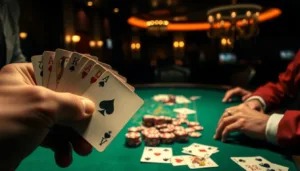
Blackjack surrender rules are often treated like a small table detail, but they can change how a disciplined player handles the worst hands in the game. The option is not about giving up emotionally; it is about recognizing when half a loss is better than forcing a weak hand into a predictable result.
That distinction matters as more players move between live casinos, online blackjack tables, and live dealer games where rule variations are easy to overlook. A player who knows when surrender is available can manage risk more intelligently, especially when bankroll discipline matters more than chasing one dramatic save.
Blackjack Surrender Rules Reward Players Who Know When To Stop
Surrender is a blackjack option that allows a player to give up the hand after the first two cards and lose only half of the original wager. The rule is simple on the surface, but its value depends on timing, table rules, and the dealer’s upcard.
The key idea is that surrender is not a panic button. It is a risk-control decision. If a player keeps a hand that has poor long-term expectation, the full bet remains exposed. If surrender is allowed and the hand is bad enough, walking away with half the wager protected can be the better play.
Not every blackjack table offers surrender. The Venetian’s table-game guide explains that surrender allows players to give up half the original wager after receiving their first two cards, while also noting that the option is not available in every blackjack format through its blackjack basic rules. That is why players should check the table rules before assuming surrender exists.
Late Surrender Is The Version Most Players Encounter
The most common version is late surrender. In this format, the dealer first checks for blackjack when showing an Ace or 10-value card. If the dealer has blackjack, the player loses the full bet before surrender is available. If the dealer does not have blackjack, the player can surrender eligible hands and lose half.
Early surrender is much stronger for the player because it allows surrender before the dealer checks for blackjack. It is also far less common. Most players who see surrender in a casino or online blackjack game are dealing with late surrender.
That difference matters because some players hear the word surrender and assume every version carries the same value. It does not. The timing of surrender changes the math, and a small rule variation can affect whether the option is useful, rare, or unavailable.
The Hands Where Surrender Usually Matters Most
Surrender is mainly useful on hands that are already in serious trouble. The classic example is a hard 16 against a dealer 9, 10, or Ace, depending on the full rule set. A hard 15 against a dealer 10 is another common surrender spot in many basic strategy charts.
These hands create pressure because the player is caught between bad options. Hitting risks busting. Standing leaves the dealer with a strong chance to finish ahead. Surrender gives the player a third path: accept a smaller loss instead of fighting from a weak position.
| Player Hand | Dealer Upcard | Why Surrender May Matter |
|---|---|---|
| Hard 16 | 9, 10, or Ace | The player is behind and hitting carries bust risk |
| Hard 15 | 10 | The dealer has a strong starting advantage |
| Pair of 8s | Dealer pressure card | Usually played by split rules, not automatic surrender |
| Soft hands | Most upcards | Usually too flexible to surrender |
| Strong totals | 17 or higher | Often better to stand than surrender |
The table is not a substitute for a strategy chart. It shows why surrender decisions are narrow. Good surrender play does not mean folding every uncomfortable hand. It means understanding which hands are weak enough that saving half the bet becomes rational.
Surrender Protects The Bankroll From Emotional Decisions
Blackjack creates frustration because bad hands often arrive at the worst time. A player may lose several hands, increase the next bet, then receive a hard 16 against a dealer 10. That is exactly when surrender can feel emotionally wrong.
The disciplined player sees it differently. The goal is not to prove toughness against the dealer. The goal is to make the least damaging decision available. A smaller controlled loss can be the strongest move when the alternative is risking the full wager from a poor position.
This is where surrender connects directly to bankroll management. Players who ignore surrender often do so because folding feels weak. But blackjack does not reward pride. It rewards decisions that reduce unnecessary exposure over many hands.
For players who struggle with repeated mistakes at the table, this guide on blackjack mistakes fits naturally with the same lesson: many losses come from emotional reactions, not just unlucky cards.
The Rule Can Be Hidden In Plain Sight
Many players miss surrender because they never ask whether it exists. At a live table, the rule may be posted in small print or included in the table’s rule placard. Online, it may appear in the game rules menu, paytable section, or help screen.
This creates a practical problem. A player may use a basic strategy chart that includes surrender decisions while playing a table that does not allow surrender. The reverse can also happen: the table offers surrender, but the player never uses it because they do not know when it applies.
Before playing, check whether the game allows surrender, whether it is early or late surrender, and whether any hand types are excluded. Also check the other rules around dealer soft 17, number of decks, double-down options, splitting, and blackjack payout. Surrender is useful, but it does not fix a weak table by itself.
Table selection still matters. A player should not choose a bad blackjack game simply because surrender is available. The full rule package decides whether the game is worth playing.
The Next Signal Is Smarter Rule Shopping
Blackjack players are becoming more aware that strategy is not only about the cards in front of them. It is also about the rules they accept before the first hand begins. Surrender is part of that shift because it teaches players to evaluate the game, not just react to the dealer.
The next pressure point is online and live dealer blackjack. More games mean more rule combinations, and players need to slow down before choosing a table that looks familiar but plays differently. A clean interface does not always mean player-friendly rules.
Responsible play also matters. If surrender becomes a way to keep playing longer while ignoring limits, the lesson has been missed. The National Council on Problem Gambling provides responsible gambling resources for players who want tools and guidance around safer play habits.
Blackjack surrender rules are valuable because they force a better question: is this hand worth the full risk, or is protecting half the wager the smarter play? For beginners, that mindset is more important than memorizing one surrender chart. It turns blackjack from emotional guessing into rule-aware decision-making, which is exactly where bankroll protection begins.