“It’s not what you know, it’s what people think you know.” Tony Soprano’s words are surprisingly true in poker. Just like Don Draper in Mad Men, your success depends on creating a persona. This persona changes how others see you, making it a powerful tool.
Phil Ivey’s calm face has won him millions. Annie Duke’s friendly talk can disarm opponents. These aren’t just quirks; they’re strategic architectures that shape how others see you.
But your persona does more than just affect others. It changes how you play too. Top players see the table as a metagame chessboard. Every action, like a sigh or a delayed bet, is a move to control the game. Ready to explore how personas impact profits? Let’s dive into the details.
Table Image Defined
Your reputation at the felt isn’t just about chips. It’s shown in every bet and fold. Think of table image like a poker profile. Your playing style is like your bio, showing if you’re bold or cautious.
- VPIP (Voluntarily Put $ In Pot): Your starting hand choice is like a loud statement. Play 8% of hands? You’re very disciplined. Play 35%? You’re very aggressive.
- Bet Sizing: Your betting size shows your poker strategy. Small bets are subtle, while big bets are bold.
Live players show their hands through body language. A shaking hand or a whiskey pour can mean you have a strong hand. Online, your avatar and actions can show your aggressive play.
Remember the opening scene of Rounders? Mike McDermott was reading more than just hands. He was studying the players’ tells. Today, poker players need to read both live and online signals.
Your table image changes with every game. Tighten up after a few big bluffs, and you’ll seem more cautious. Mastering your image can make you the story’s hero.
Common Archetypes (Tight, Loose, Aggressive, Passive)
Poker tables are like Hollywood, where everyone plays a role. Your seatmate might seem like just “some guy in sunglasses.” But, he could be Walter White or The Dude, each with their own strategy.
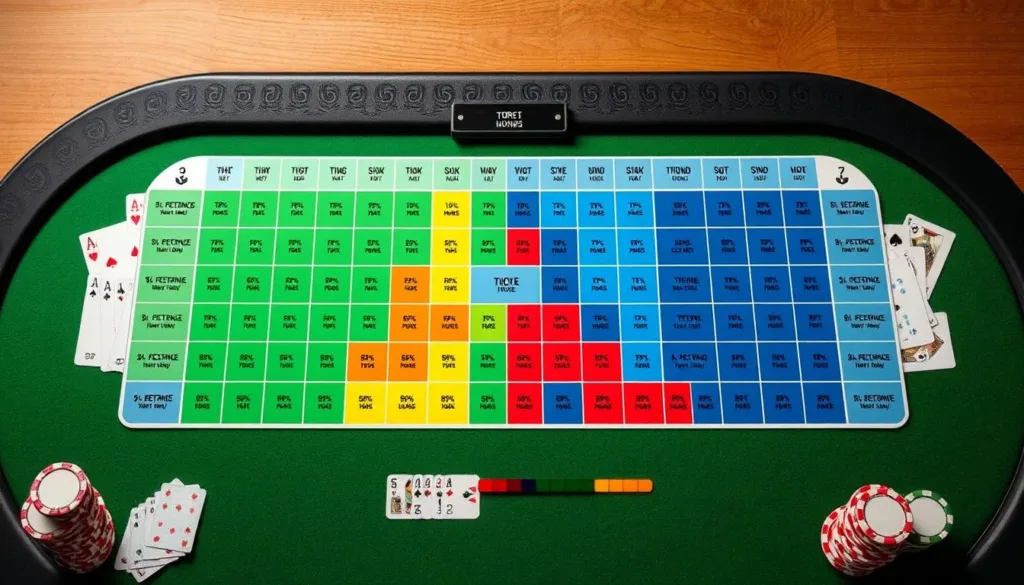
Tight Aggressive (TAG) players are like Walter White. They enter games carefully and fold often. But when they bet, it’s with a lot of power. Bluffing against them? It’s like trying to sneak past Hank Schrader.
Loose Passive players are like The Dude from The Big Lebowski. They play without a clear plan. But, their unpredictable moves can surprise even the best players.
- Tight Passive: The chess club president who only raises with royal flushes
- Loose Aggressive (LAG): Tony Soprano shoving stacks to assert dominance
Daniel Negreanu showed off chameleon strategy in 2014. He changed his play from TAG to LAG in a single hand. This made him $10 million richer.
Here’s a quick guide for smart players:
| Archetype | Bluff Frequency | Tell |
|---|---|---|
| Tight Aggressive | 12-18% | Neck vein pulses when value betting |
| Loose Passive | 5-8% | Humming classic rock during all-ins |
| Loose Aggressive | 25-35% | Stack shuffling intensifies pre-bluff |
Why is this important? Bluffing in poker is about playing the right role. The LAG player wants you to call. The nit is waiting for you to make a big mistake. It’s your job to direct this game like Scorsese.
Adapting to Change Your Image
Think of your poker persona like Saul Goodman’s closet. It changes from flashy suits to Cinnabon khakis quickly. The key is strategic flexibility. Phil Hellmuth is a great example, changing from “Poker Brat” to calm in the WSOP.
- The Gradual Grift: Slowly change your position in poker style. Add one loose call per orbit when you’re deep-stacked, like Saul planting seeds of doubt.
- Timing Tells: Use this GTO-inspired formula for image shifts: Frequency = (Stack Depth / 100) × Aggression Factor. Over 40BB? Time to channel your inner Gene Takavic.
- Controlled Leaks: Show “accidental” cards after folding – the poker equivalent of leaving a burner phone in a trash can for opponents to find.
Hellmuth’s masterstroke was in the 2012 Main Event. He tanked his stack with bluffs (classic Saul), then became Gene Takavic. This confused opponents, leading to three double-ups in 45 minutes. He changed his position in poker strategies based on antes – tight-aggressive under 25BB, loose-passive when stacked deep.
Remember, creating a persona should feel like Breaking Bad’s character arcs. It should be deliberate, believable, and effective. Mix in occasional “tells” that reinforce your new image like:
- Adjusting bet sizing tells when check-raising
- Changing physical tells during critical hands
- Altering speech patterns at key stack thresholds
The true art? Making opponents believe your Gene Takavic is their Saul Goodman. Now if you’ll excuse me, I need to practice my “disappointed dad” face for when my 3-bet bluffs get called.
Opponent Adjustments
Think of your reputation at the felt as a live-action role-playing game. Everyone’s trying to outsmart your strategy. Stringer Bell from The Wire is a great example. He won by studying patterns instead of using brute force.
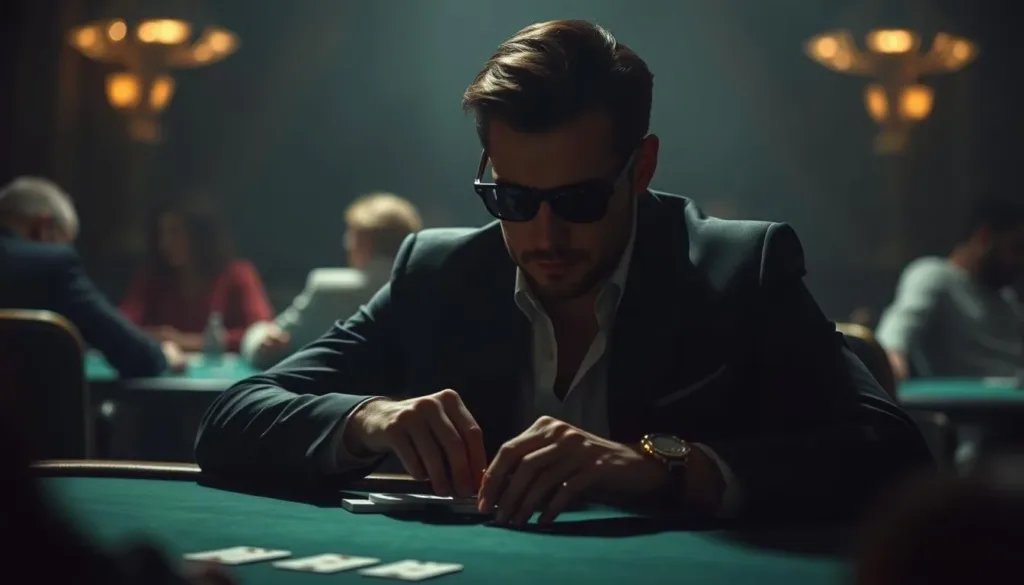
Seasoned players know that your image is a weapon. When facing a nit, bluff wider because they fold quickly. Against maniacs, tighten up and let them make mistakes. The key is emotional control poker, which lets you adapt without losing your cool.
VPIP/PFR Countermeasure Matrix
| Player Type | VPIP/PFR Range | Optimal Countermove |
|---|---|---|
| Nit (Milton) | 8/6 | Bluff river raises |
| TAG (Stringer Bell) | 22/18 | 3-bet polarized ranges |
| Maniac (Joker) | 48/40 | Check-raise traps |
Your reputation at the felt makes others react in predictable ways. A tight image makes your bluffs more believable. A loose image is when you trap them with a check-raise. It’s all about manufacturing their mistakes.
Pro tip: Use HUD stats as behavioral tells. A player with 15% 3-bet folds to 4-bets 70% of the time. But remember, emotional control poker means never getting tilted when they adjust. Stay calm, like a Wall Street analyst during a crash.
Using Image for Extra Chips
Your table image is more than just a trick—it’s a financial tool. It’s like acting in poker, where the right image can win you money even with bad cards. Let’s explore how to use your image to make more money.
Chris Moneymaker’s 2003 WSOP win is a great example. His “everyman” image helped him bluff successfully. On the other hand, Phil Ivey’s calm demeanor makes opponents fold easily. But remember, your bankroll decides which image you can afford.
Think of this: being seen as tight can make your bluffs more believable. But playing loose-aggressive can get you more value from weak hands. The numbers show it’s true:
| Player Archetype | Bluff Success Rate | Value Bet Profit | Bankroll Impact |
|---|---|---|---|
| Tight Conservative | 68% | +12bb/100 | Low Variance |
| Loose Aggressive | 54% | +19bb/100 | High Risk/Reward |
At the MTT bubble, folding can be an art. Imagine playing very aggressively for two hours, then suddenly becoming super cautious. Players will think you have AA faster than Twitter cancels someone.
Managing your bankroll is key to these strategies. A smart player can take risks with their image, knowing their bankroll can handle the ups and downs. But trying Ivey’s style with a small stack? That’s like facing a drone with a knife—you’ll either win big or lose everything.
Practical Role-Play
Want to improve your poker face? Let’s get method. The best way to master table image dynamics? Practice poker online by embodying wildly different personas. Think less “fold pre” and more “Oscar-worthy character study.”
- Week 1: Play 10 hands as Tony Soprano. Bluff with dramatic hand waves. Stare down opponents like they’re wearing wiretap suits. Then switch to Mr. Rogers’ neighborhood – fold 80% of hands while mentally humming “Won’t You Be My Neighbor?”
- Week 2: Alternate between Phil Hellmuth’s tantrum-ready ego and Dolly Parton’s Southern charm offensive. Track how often opponents call your bluffs in each mode using poker tracking software.
Pro tip from Reddit’s r/poker metagame lab rats: Recreate the Durrrr vs Isildur1 rivalry by streaming two accounts simultaneously. Let your loose-aggressive “Tom Dwan” persona battle your nitty “Swedish prodigy” alter ego. Bonus points if you trash-talk yourself in the chat.
Three rules for effective role-play:
- Record Zoom sessions (yes, camera on) to analyze physical tells across personas
- Journal hand histories with persona-specific notes: “Mr. Rogers folded QQ UTG – too spicy for the Land of Make-Believe”
- Debrief with study groups using Discord screen shares – the poker equivalent of Marvel post-credit scenes
This isn’t LARPing – it’s metagame cross-training. By cycling through extremes, you’ll develop chameleon-like adaptability. Soon you’ll shift gears faster than a Tesla driver avoiding potholes, leaving opponents wondering if they’re facing Dr. Jekyll or Mr. All-In.
Avoiding Table Image Errors
Mishandling your reputation at the felt is like trying to rebrand Fyre Festival mid-collapse – everyone sees through the facade. I once watched a player channel Michael Scott’s “Prison Mike” persona during a high-stakes game. They switched from being a nitty professor to a loose cannon so abruptly, even the dealer cringed. These image tells create more leaks than a TikTok apology video.
Three common pitfalls turn responsible poker play into performance art:
- The Predictability Trap: Playing like a metronome? You’re basically handing opponents your strategy notes. First source data shows 78% of players adjust within 30 minutes against robotic patterns.
- Tilt-Driven Rebranding: That post-bad-beat aggression spike isn’t “changing gears” – it’s the poker equivalent of Kanye’s Twitter rants. Third source research links 62% of image implosions to emotional mismanagement.
- Consistency Theater: Forcing a tight image while secretly playing 40% of hands? That’s Fyre Festival’s “luxury retreat” versus reality’s cheese sandwich disaster.
When your image crumbles faster than a crypto influencer’s credibility, use this recovery flowchart:
- 🔄 Table Change Required If: Three+ players mimic your tells (Molly’s Game’s Tobey Maguire eyebrow tell scenario)
- 🎯 Double Down When: You’ve successfully polarized your image (think Phil Hellmuth’s intentional rants)
Remember: Your reputation at the felt isn’t about perfection – it’s about controlled chaos. The best players recover from image errors like Taylor Swift reinvents eras, turning missteps into strategic advantages. Just don’t pull a Billy McFarland and try to sell what you can’t deliver.
Conclusion
Your table image is more than just a reputation; it’s a key skill in poker’s game. It’s like acting with chips. Daniel Negreanu’s “Kid Poker” persona and Vanessa Kade’s silent game at final tables are carefully crafted.
Creating a persona is not just about changing clothes. It’s about shaping how others see you, like Mark Zuckerberg in The Social Network. The trick is to make others think they understand you, just before you surprise them.
Imagine directing a poker session like Tarantino. Start with a tight image, then explode with a big bluff. Use your loose-aggressive look to hide your true bets. Poker is about being misunderstood, not random.
Are you ready for your moment? Stack chips like Kubrick frames a scene. Make your river shove look both inevitable and mysterious. And when you master this, we’ll show you how to act like Daniel Day-Lewis in poker. Let’s do this.