Walking into a casino or logging into a sportsbook without a plan is like trying to navigate I-95 during rush hour without a map. You’ll end up lost, frustrated, and with less money.
We’re here to show why a bankroll plan is more than just numbers on a page. It’s the smart way to gamble, not a hobby that can cost you money.
Think of it as creating your own Monte Carlo simulation. But with less glamour and more practical thinking.
An old casino saying is very wise: “The highest form of wisdom is to know when to play and when to stay away.” A good bankroll plan is your guide to making smart choices.
It turns gambling into a fun, structured activity. This is the key new player guide to keep your money safe and play longer.
Ready to take control? Let’s start.
Assessing Your Gambling Goals
Before you can manage your casino money, you must first define what you’re trying to buy with it—is it entertainment, profit, or something else entirely? This isn’t a philosophical exercise. It’s a financial audit of your intentions.
Pull up your last bank statement. Now, ask yourself the real question. Are you funding a night of cinematic fun, complete with free drinks and the sound of slots? Or are you building an investment stake for the weekly poker game? Your goal isn’t a secret. It’s written in your spending history.
True casino money management begins with this brutal honesty. The money you play with should come from one source only: disposable income. This is the cash left after taxes, rent, groceries, your streaming subscriptions, and yes, even your emergency fund for avocado toast shortages. If losing it means you’re reheating canned beans for a week, you’ve already failed step one.
Let’s categorize the common gambler archetypes. Your goal likely fits one of these profiles:
- The Weekend Tourist: You allocate a fixed sum, say $100, for a night of entertainment. This is your “fun tax.” Winning is a bonus, but losing means the show’s over. Your bankroll management is simple: it’s an entertainment budget, no different from concert tickets.
- The Strategic Grinder: You see poker or blackjack as a skill-based side hustle. Your bankroll is a working capital fund. You’re not spending it; you’re deploying it. Profits are reinvested, losses are analyzed. This requires a much larger, dedicated pool of disposable income.
- The Event Chaser: Your goal is the slow burn of a sports betting season or a multi-day poker tournament. Your capital needs to withstand variance—the inevitable losing streaks. Your bankroll isn’t for a night; it’s for a campaign.
So, which one are you? The answer dictates everything. The Tourist doesn’t need a five-thousand-dollar bankroll. The Grinder will blow a $50 stake in two hands. Confusing these goals is the fastest way to turn your disposable income into disposed income.
This self-assessment is the cornerstone of all smart play. It separates the disciplined planner from the hopeful spender. You’re not just finding “extra” money. You’re defining a purpose for funds that can be lost without consequence. That’s the first, and most critical, rule of real casino money management.
Get this step wrong, and every bet that follows is built on financial quicksand. Get it right, and you’ve just given yourself the only real edge in the house: clarity.
Calculating a Safe Starting Bankroll
Don’t guess at a bankroll; it’s about math. It’s not about being like Warren Buffett. It’s about using a simple percentage based on your money. You want to lose in a way that’s just a bit disappointing, not a big deal.
The key is to use 2 to 5 percent of your monthly disposable income. Disposable income is what’s left after you pay bills and buy groceries. It’s your “fun money.” Using 2-5% of it for your gambling budget is a good rule.
Why this range? Two percent is for the cautious. Five percent is for the adventurous but cautious. It makes gambling feel like a planned expense, not a risk.
After finding your total bankroll, divide it into “units.” Risk only 1 to 2 percent of your total bankroll on a single bet or hand. This unit system helps avoid the trap of chasing losses. But first, you need to know your total amount.
| Monthly Disposable Income | 2% (Conservative) Bankroll | 5% (Adventurous) Bankroll | The “Vibe” of a Total Loss |
|---|---|---|---|
| $500 | $10 | $25 | Like a mediocre takeout meal. |
| $1,000 | $20 | $50 | Equivalent to a concert tee you never wear. |
| $2,000 | $40 | $100 | A nice bottle of wine that didn’t impress. |
| $4,000 | $80 | $200 | A premium gym month you barely used. |
Let’s say you have $2,000 left after bills. A good gambling budget is $40 to $100. That’s your bet. This isn’t about making money; it’s about setting a budget for fun. Losing $100 should feel like a pricey night out, not a disaster.
This is the smart part of bankroll management. It’s what separates a fun player from a reckless one. By linking your bet to a small part of your money, you keep your wallet and mind safe. The fun starts when you set this number in your budget.
Allocating Funds by Game Type
Setting up your bankroll for different casino games is like choosing roles in a heist movie. Each game needs its own strategy. Your poker bankroll isn’t the same as your slots stake. This is where bankroll planning gets strategic.
Variance is a big deal. It’s the ups and downs every game faces. Some games are smooth, while others are wild.
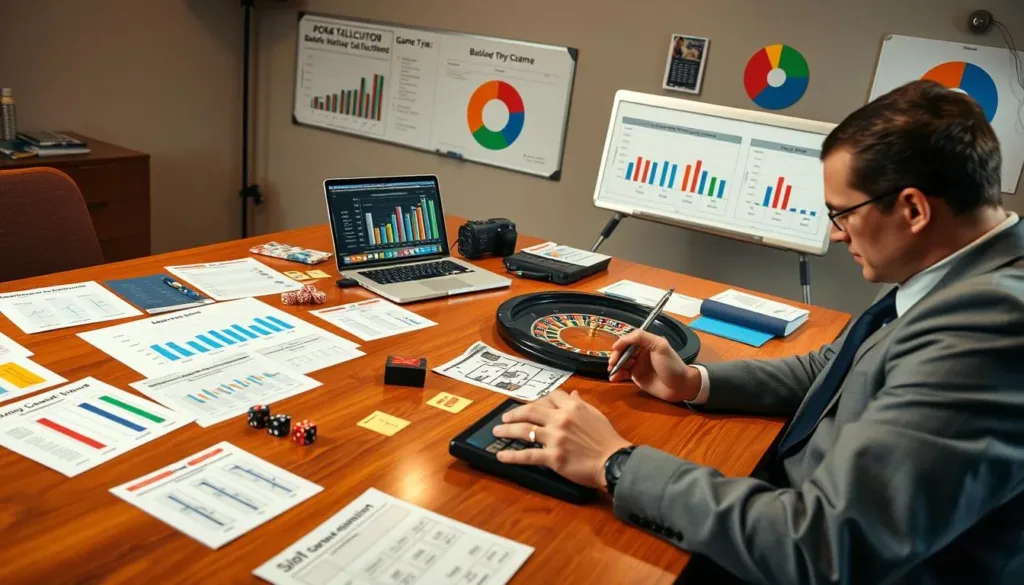
Variance is like the weather for your money. Poker is a long, unpredictable storm. Slots are sudden, violent storms. Your bankroll is your outfit for each storm.
Let’s talk about how much money you need. It’s not a one-size-fits-all solution. It’s more like custom tailoring.
The Poker Grinder’s War Chest
Poker variance is tough, even for pros. A winning player can lose for months. It’s not bad luck; it’s math.
The key is to keep 20 to 30 full buy-ins for cash games. If you play $1/$2 No-Limit Hold’em with a $200 max buy-in, your poker bankroll should be $4,000 to $6,000. This lets you handle losses without using your life savings.
Navigating the Slot Volatility Vortex
Slots are different. Here, volatility is key. A high-volatility slot might pay a jackpot once every 50,000 spins. You need a big bankroll to survive the wait.
For these games, think in terms of hundreds, even thousands, of bet units. A $5 spin on a mega-volatile slot? Your session bankroll might need to be $500 just to see if the feature round triggers. Proper bankroll planning for slots accepts that most spins are donations to the entertainment fund.
The Sports Bettor’s Disciplined Stakes
Sports betting is about edge and volume. The pros bet tiny percentages of their total bankroll on each play. This smooths out variance over hundreds of wagers.
The standard is the 1-3% rule. If you have a $1,000 sports betting bankroll, your typical wager should be $10 to $30. This disciplined approach prevents one bad weekend from wiping you out. It turns betting from a gamble into a portfolio strategy.
Table Games: The Calculated Reserve
Games like blackjack or baccarat have lower variance than poker or slots. Your bankroll can be leaner, more surgical. A common tactic is to hold 40 to 50 times the table minimum.
At a $15 blackjack table, a $600 to $750 bankroll allows you to weather normal fluctuations and play your strategy without fear. You’re not preparing for a siege. You’re funding a strategic campaign.
| Game Type | Key Metric | Recommended Bankroll Buffer | Mindset |
|---|---|---|---|
| Poker (Cash Games) | Buy-Ins | 20-30 Buy-Ins | Surviving the Downswing |
| High-Volatility Slots | Bet Units | 100-1000x Bet Size | Weathering the Drought |
| Sports Betting | Total Bankroll % | 1-3% per Play | Portfolio Management |
| Blackjack/Table Games | Table Minimum | 40-50x Minimum | Strategic Session Funding |
Mixing these strategies is financial suicide. Bringing a poker-sized bankroll to a high-limit slot is like using a sledgehammer for watch repair. The tool is wrong for the task.
Your allocation is your masterstroke. It acknowledges that each game has its own rhythm, its own danger. Smart bankroll planning isn’t about having one big pile of cash. It’s about having the right pile, in the right place, for the right fight.
Setting Win & Loss Limits
Why do smart players decide when to leave before they even sit down? It’s because the excitement of the moment can be misleading. This is the key to top-notch casino money management. You need to set your exit plan before you start betting.
Think of it as setting a spending limit. A loss limit, usually 40 to 50 percent of your bankroll, acts as a safety net. It’s not just a suggestion; it’s a hard stop. When you hit it, the game ends. No arguing or trying to win back losses.
The win goal is its more optimistic, yet strict, counterpart. Aiming to double your buy-in is common. It’s not about being greedy; it’s about keeping what you’ve won. You might feel like you’re on a winning streak, but you can lose.
This strategy helps you outsmart your future self. It turns a potentially endless session into a set time for fun. You’re not just playing; you’re following a plan.
Without these limits, you’re lost. The casino’s edge isn’t just in the rules; it’s in the endless time. Your discipline is the key. Setting limits is taking control. It’s the difference between watching your money go and directing your play.
This is advanced casino money management at its best. It turns uncertainty into a manageable factor. The smart player doesn’t rely on discipline in the moment. They build it into their play.
Record Keeping and Tracking
Think of your gambling budget like a political campaign fund. Without tracking, it’s just money thrown away. You wouldn’t run a business without a ledger, and gambling is no different. Logging every transaction is key to success.
This isn’t about ruining the fun. It’s about turning chaotic betting sessions into useful data. This is what separates a player from an analyst.
A simple spreadsheet is your best ally. Use a Google Sheet or Excel to track date, game, bet amount, and results. It reports everything without judgment.
If spreadsheets seem too much, try bankroll apps. They log sessions, calculate ROI, and show your financial path. They help you know if you’re spending on a hobby or losing money.
What should you track? The details matter.
- Every Bet: The stake, the game, the time. This is your raw data.
- Wins & Losses: The outcome, without the celebration or consolation.
- Return on Investment (ROI): The percentage that shows if your strategy works.
- Session Duration: Because tired decisions can cost you a lot.
This process uncovers hidden issues. Maybe your “can’t-miss” bets are losing money, or you’re wasting it on slots. Your gambling budget tracker reveals which games are good and which are bad.
Consistent tracking leads to better decisions. You’ll move from guessing to knowing. Your gambling budget tracker is your guide. Are you listening?
Online Tools and Templates
In today’s world, willpower is old-fashioned. Smart gamblers use software to stay disciplined. This isn’t cheating; it’s smart strategy. Your bankroll planning needs advanced tools, just like your game strategy.
Every good online casino has tools to help you gamble responsibly. These aren’t just legal requirements. They protect your wallet. Think of them as your wallet’s safety features.
Set a deposit limit, and the site won’t let you add more money for a while. Loss and session limits work the same way. They help you stick to your plan.
The reality check is a pop-up that reminds you how long you’ve played. It’s a gentle nudge to take a break. Self-exclusion tools are the ultimate stop. Using them shows you’re smart about managing your gambling.

Outside the casino, there are many tools to help you. A simple trick is to use a separate bank account for gambling. It keeps your hobby separate from your everyday money.
Dedicated apps can track your gambling for you. They log your sessions and show your progress. Why remember everything when an app can do it for you?
For those who like to plan, a spreadsheet template is great. You can set rules and targets in it. You don’t have to start from scratch. Just search for “gambling bankroll template” to find many options.
| Tool Type | Key Function | Best For | Example / Note |
|---|---|---|---|
| Built-in Site Features | Automated enforcement of limits and time. | All players, including new ones. | Deposit limits, session timers, reality check pop-ups. |
| External Apps | Centralized tracking and data analysis. | Players who track multiple games. | Dedicated bankroll management or sports betting tracker apps. |
| Spreadsheet Templates | Customizable planning and manual logging. | Players who like to control their plans. | Google Sheets or Excel templates with pre-set formulas for ROI. |
These tools make discipline easy. They turn it into a background process. It’s like having a system to help you breathe.
This is the essential part of any new player guide. A good plan needs strong enforcement. Using these tools is smart bankroll planning. It’s about playing the game of strategy, not just the game itself.
Example Plans for Blackjack, Poker, Roulette
It’s time to see bankroll planning in action. We’ll focus on Blackjack, Poker, and Roulette. These are the games you love, and now you’ll know how to play them smart.
You have $500 to spend at the $10 tables. The goal is to bet 40 to 50 times the table minimum. That’s $400 to $500. But remember, don’t bet it all at once.
Split your $500 into five $100 sessions. Each session is a new challenge. At a $10 table, a $100 session means 10 bets. Bet $10-$20 per hand to manage risks.
The Poker Player’s Tactical Reserve
Poker is a long game of short battles. For a $1/$2 No-Limit Hold’em game, you need a strong bankroll. Aim for 20 to 30 buy-ins, which is $4,000 to $6,000.
Let’s say you’re down 30%, or $1,200 from a $4,000 bankroll. Don’t try to win back money by betting more. Instead, drop down to $0.50/$1 games to rebuild your bankroll. This way, you avoid losing too much.
The Roulette Romanticist’s Reality Check
Roulette is a game of chance. The house edge is high, so your goal is to enjoy the game. Plan your bets to last longer, not to win big.
If you have $200 for roulette, make 40 bets of $5. Bet on even-money options like red/black or odd/even. This way, you can play longer without risking too much. Don’t dream of winning big; just enjoy the ride.
These examples turn theory into a real plan. Whether you’re playing cards, bluffing, or watching the roulette ball, a solid plan is your best bet.
FAQs
Every gambler, from rookie to veteran, has wondered about these questions. Let’s answer them clearly and honestly. This is your essential casino money management FAQ, designed to cut through the noise.
The 5% rule is like a financial seatbelt in the casino world. It means you should never risk more than 5% of your total session bankroll on a single bet. It’s not a hard rule, but a good guideline. For high-volatility games like slots, you might drop to 2%. For skilled games like blackjack, you could nudge it to 10%. The key is to never let one bad hand wipe you out.
Q: How do you actually calculate a starting bankroll without just guessing?
This is where we separate wishful thinking from math. Your bankroll isn’t “extra cash.” It’s money you can genuinely afford to lose without affecting your rent, groceries, or Netflix subscription. A common, sober method is to take 2-5% of your monthly disposable income. If you have $1,000 left after bills, a $20-$50 bankroll is a rational start. This calculation is the bedrock of any serious new player guide.
Q: What is the “safest” betting strategy? Is flat betting just boring?
Flat betting—wagering the same amount every time—is the statistical safety net. It’s the Volvo station wagon of strategies: not flashy, but it dramatically reduces your risk of a catastrophic crash. Is it boring? To some, yes. But calling it “boring” is like calling a foundation “unexciting.” It’s not there to thrill you; it’s there to keep the house standing. For pure preservation of capital, it’s unmatched.
Q: Okay, but how much bankroll do I REALLY need for my specific game?
Ah, the million-dollar question (though hopefully, it costs less). The answer varies wildly because a slot machine and a poker table have about as much in common as a lottery ticket and a chess match. You need a plan tailored to the game’s rhythm, house edge, and your own skill level.
Let’s break it down with some concrete numbers. This table isn’t a rigid prescription, but a realistic framework to build your personal casino money management plan upon.
| Game | Key Factor | Recommended Minimum Bankroll | Why This Amount? |
|---|---|---|---|
| Blackjack | Skill & Basic Strategy | 40-50 Minimum Bets | Absorbs normal variance. With a $5 table, aim for $200-$250. Gives you room to play and adjust. |
| Poker (Cash Game) | Skill & Volatility | 20-30 Buy-Ins | Even great players face long downswings. For $1/$2 NLHE where a buy-in is $200, you need $4,000-$6,000 to be properly rolled. |
| Roulette | Pure Chance & House Edge | 60-80 Unit Bets | The house edge is a constant grind. A larger bankroll lets you ride out cold streaks without panic-betting. At $5/unit, plan for $300-$400. |
| Slots/Video Poker | High Volatility & RTP | 200-300 Bet Units | These games are designed for big swings. You need a deep cushion to have a session longer than five minutes. Betting $1/spin? Bring $200-$300 minimum. |
| Craps | Complex Betting & Odds | 50-60 Pass Line Bets | Allows you to use advantageous odds bets while surviving the inevitable “seven-outs.” On a $10 table, $500-$600 is a solid foundation. |
The final word? These FAQs are your toolkit, not your chains. The best new player guide gives you principles, not prison sentences. Understand the “why” behind the 5% rule, the logic of the bankroll calculation, and the purpose of flat betting. Then, apply them to the real numbers for your game of choice. That’s how you move from asking questions to having answers.
Final Tips
Think of your plan as a promise to your future self. The ink is your discipline.
Your gambling budget is a strict rule. It shows when to play and when to stop. Remember, past results don’t affect future games. The PGA Tour teaches this in their golf betting advice.
Don’t chase losses; it’s a sign of desperation. Betting more than you can afford is a quick way to lose money. Set limits for deposits and withdrawals to keep your profits safe. View that money as entertainment, not an investment.
Whether betting on blackjack or golf, the rule is the same. A small win is a win. A loss is just that, not a personal failure. The best strategy is to follow your own rules.
The last tip? Stop when the fun ends. That’s the essence of responsible gambling.