Knowing how to read slot paytables can prevent one of the simplest slot mistakes: spending money before understanding what the game is actually asking you to hit. The reels may show familiar symbols, flashy jackpots, and free-spin banners, but the information screen determines what qualifies as a win and what conditions sit behind the advertised features.
A paytable is best treated as the game’s instruction manual, not a list of tempting prize amounts. Players who want deeper context on how those rules connect with probability can separately look at slot machine odds and probability, but the first job is simpler: understand the game in front of you before choosing a stake.
How to Read Slot Paytables Without Getting Lost
Modern paytables can stretch across several screens. One page may show standard symbols, another special icons, another free spins, and another jackpot conditions. Trying to absorb everything at once usually makes the screen look more complicated than it is.
Start by answering five questions: How are wins formed? Which symbols are special? What triggers the main feature? Does the bet size affect eligibility? Are there extra conditions attached to jackpots or bonus prizes?
That approach reflects the way formal gaming-device standards treat player-facing information: game rules, paytables, help screens, paylines, unique features, and bet-related information should explain how the game operates before a wager is committed.
The useful distinction is rules before rewards. A large number beside a symbol means little until you know how many matching symbols are required, where they must land, and what betting unit the displayed payout uses.
Start With the Win Pattern, Not the Biggest Number
Players often open a paytable and immediately look for the highest-paying symbol. That is understandable, but it skips the rule that decides whether those symbols form a winning combination at all.
A traditional line-based slot might require matching symbols on an active payline. Other games can use ways-to-win mechanics, clusters, adjacent reels, or another defined pattern. Some pay from a particular direction, while others apply different rules.
The paytable should tell you which format the game uses. Look for wording describing paylines, eligible reel positions, minimum matching symbols, and the direction in which combinations are evaluated.
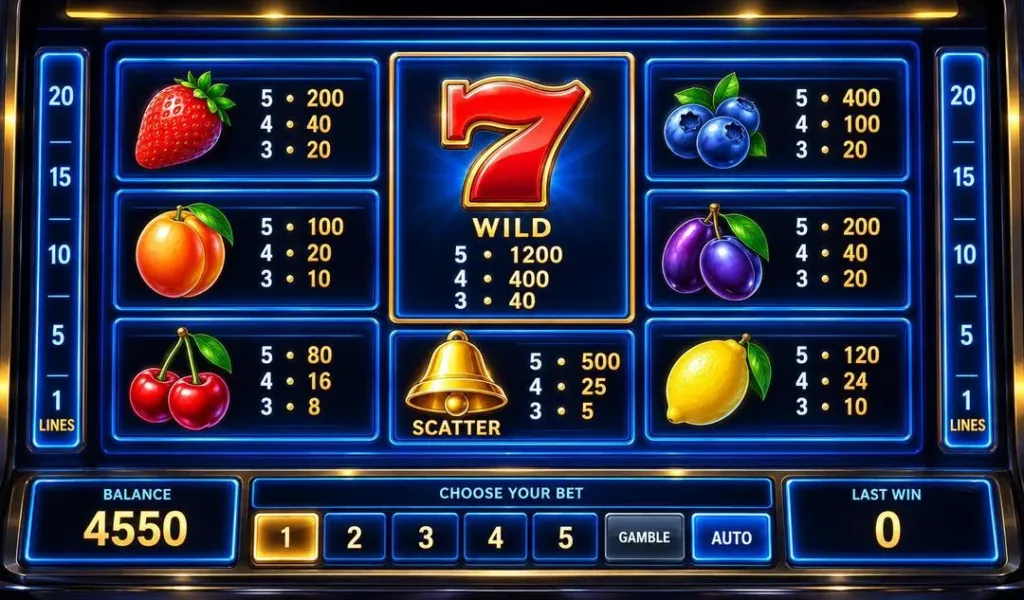
Then move to symbol values. Check how much two, three, four, or five matching symbols pay where applicable and whether the figures represent credits, multipliers, line-bet amounts, or another unit.
That distinction matters because displayed numbers need context. Seeing “100” on a paytable does not automatically mean a $100 payout.
Here is a quick checklist for the information screen:
| Paytable area | What to check | Common mistake |
|---|---|---|
| Win system | Lines, ways, clusters, direction | Assuming every match pays |
| Regular symbols | Required count and displayed value | Looking only at the top symbol |
| Wild | Substitution and special behavior | Assuming it replaces everything |
| Scatter | Required number and valid positions | Assuming every scatter triggers |
| Bonus | Trigger, retriggers, feature rules | Chasing a feature without reading it |
| Jackpot | Eligibility and bet conditions | Assuming every stake qualifies |
A thirty-second scan of those categories usually explains more about the game than several spins made without reading the rules.
Wilds, Scatters, and Bonus Symbols Need Separate Checks
A wild is not a universal rule. It may substitute for ordinary symbols, but a particular game can exclude scatters, bonus icons, jackpots, or other special symbols. Wilds can also expand, move, remain in place, carry multipliers, or behave differently inside a bonus round.
Scatters deserve the same attention. Some games award something based on the number of scatters visible anywhere on the grid. Others use them primarily to unlock free spins or another feature. The trigger can depend on the number of scatters, their positions, or the reels on which they appear.
Bonus symbols can be separate from scatters altogether.
The safest habit is to ask three questions for every special icon: where can it appear, how many are required, and what happens when the condition is met?
That prevents the common mistake of assuming familiar symbols mean familiar rules. Two slots can both show a wild and scatter while handling them very differently.
Bet Requirements Can Change What a Prize Really Means
The betting section is one of the most practical parts of a paytable because it connects the game rules to actual spending.
Check the minimum total bet, available denominations, number of lines if adjustable, coin or credit value, and the amount displayed before pressing spin. On some games, changing one control can alter the total wager more than a player expects.
Paytable values also need to be read alongside those settings. A prize may be expressed in credits or as a multiple of a defined wager rather than a fixed dollar amount.
Multi-game machines can also contain different game configurations or paytables. Nevada regulators specifically distinguish between individual paytables within multi-game slot machines in their slot paytable controls, which reinforces a useful player habit: read the rules for the exact game currently selected instead of assuming the cabinet itself tells you everything.
Before increasing a stake, confirm what the higher wager actually changes. A larger bet is still a larger risk, even when the screen makes additional credits feel routine.
Jackpots and Bonus Features Come With Conditions
A large jackpot displayed above the reels can dominate attention, but eligibility belongs in the rules.
Check whether the jackpot is fixed or progressive, whether a particular wager level is required, whether a separate symbol combination activates it, and whether entry into a bonus feature is necessary. Do not assume that simply playing the machine makes every displayed prize available at every bet amount.
Free spins and other features deserve similar scrutiny. Look for the number of triggering symbols, starting spins or respins, retrigger conditions, multipliers, special reels, and any changes that occur once the feature begins.
The same principle applies to headline maximum wins. The paytable may explain exactly which combination or feature sequence is needed. That makes the maximum a game rule—not a prediction of what a normal session will produce.
The 30-Second Check Before the First Spin
Before spending anything, identify the winning pattern, top and low symbols, wild behavior, scatter or bonus trigger, total stake, and any jackpot requirements. If one of those remains unclear, stay on the information screen until the rule makes sense.
Knowing how to read slot paytables does not change the random outcome of the next spin. It changes something more practical: whether you understand what you are paying for.
Artwork can sell the theme and animations can sell the excitement, but the paytable defines the game. Reading it first makes the wager deliberate rather than experimental—and ensures the first real-money spin is made with the rules already understood.
FAQ
Where can I find the paytable on a slot machine?
Look for an information, help, rules, or paytable button on the game interface. Physical machines may also display key payout information on the cabinet or screen alongside additional digital help pages.
Do wild and scatter symbols work the same way on every slot?
No. Their behavior is game-specific. A wild may have substitution restrictions or special effects, while scatters can trigger features, pay independently, or require particular positions depending on the rules.
Does betting more always unlock a bigger slot payout?
Not automatically. Some games scale payouts with the wager, while specific jackpots or features may have separate eligibility conditions. Check the paytable and betting rules before assuming a higher stake changes prize access.